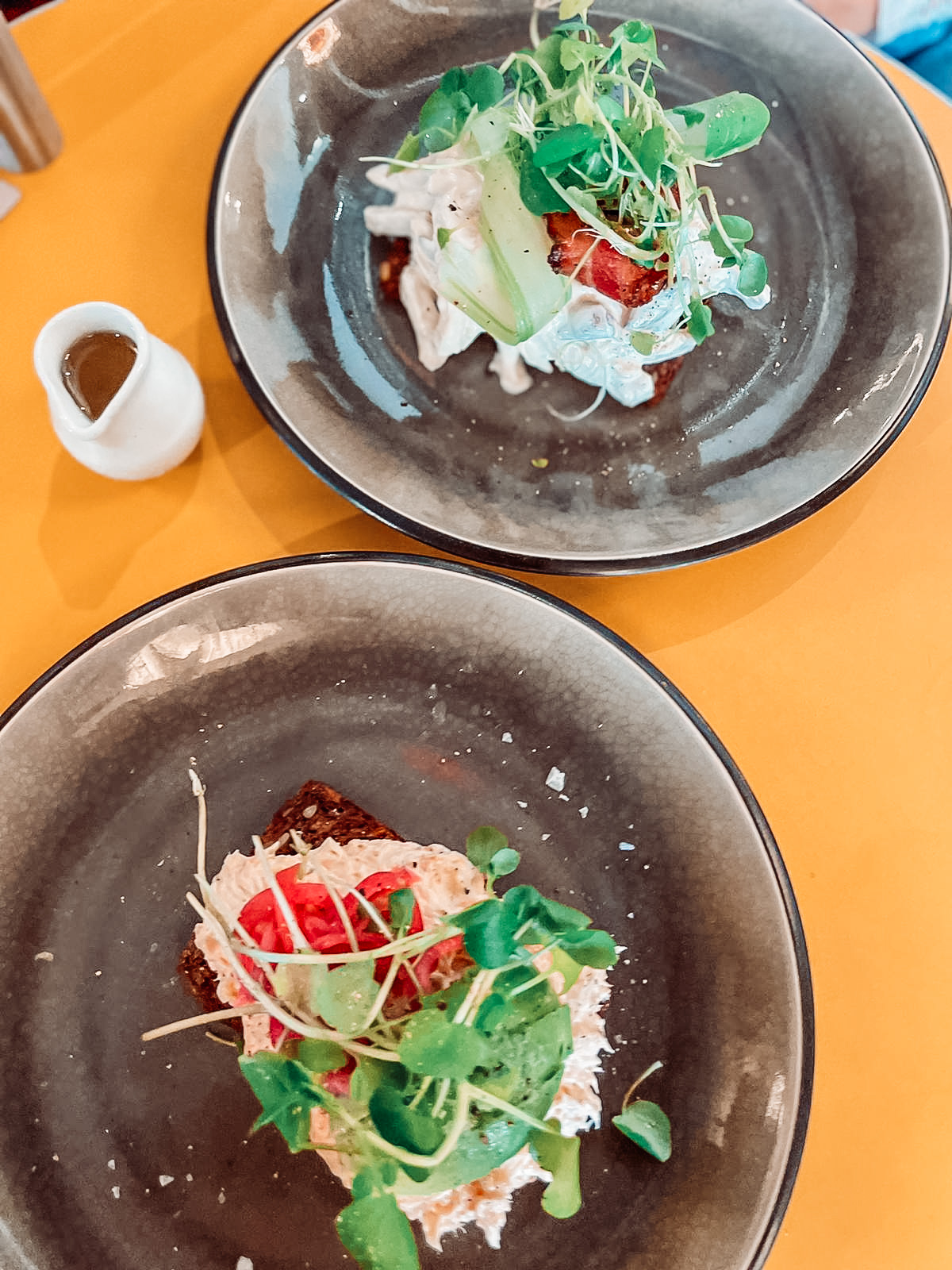
Last weekend I had to try the traditional Danish smørrebrød, which is an open faced sandwich on buttered rye bread. The name of the sandwich itself comes from the word for butter (smør) and bread (brød) and the sandwiches are piled high with so many toppings that they need to be eaten with utensils.
I was told that smørrebrød became popular in the late 19th century, when factory workers began eating lunch away from home. Workers would pile whatever leftovers they had onto cheap, filling rye bread in hopes to stay full until dinner. The smørrebrøds pictured above are salmon and chicken, but more traditional versions include pickled herring, cured meats, onions, parsley or pickled beets.
This sandwich is known by different names in other Scandinavian countries. In Norway it’s smørbrød, in Sweden it’s smörgås and in Finland it’s voileipä (which still originates from the words butter (voi) and bread (leipä).
 The Jo Show