Würzburg

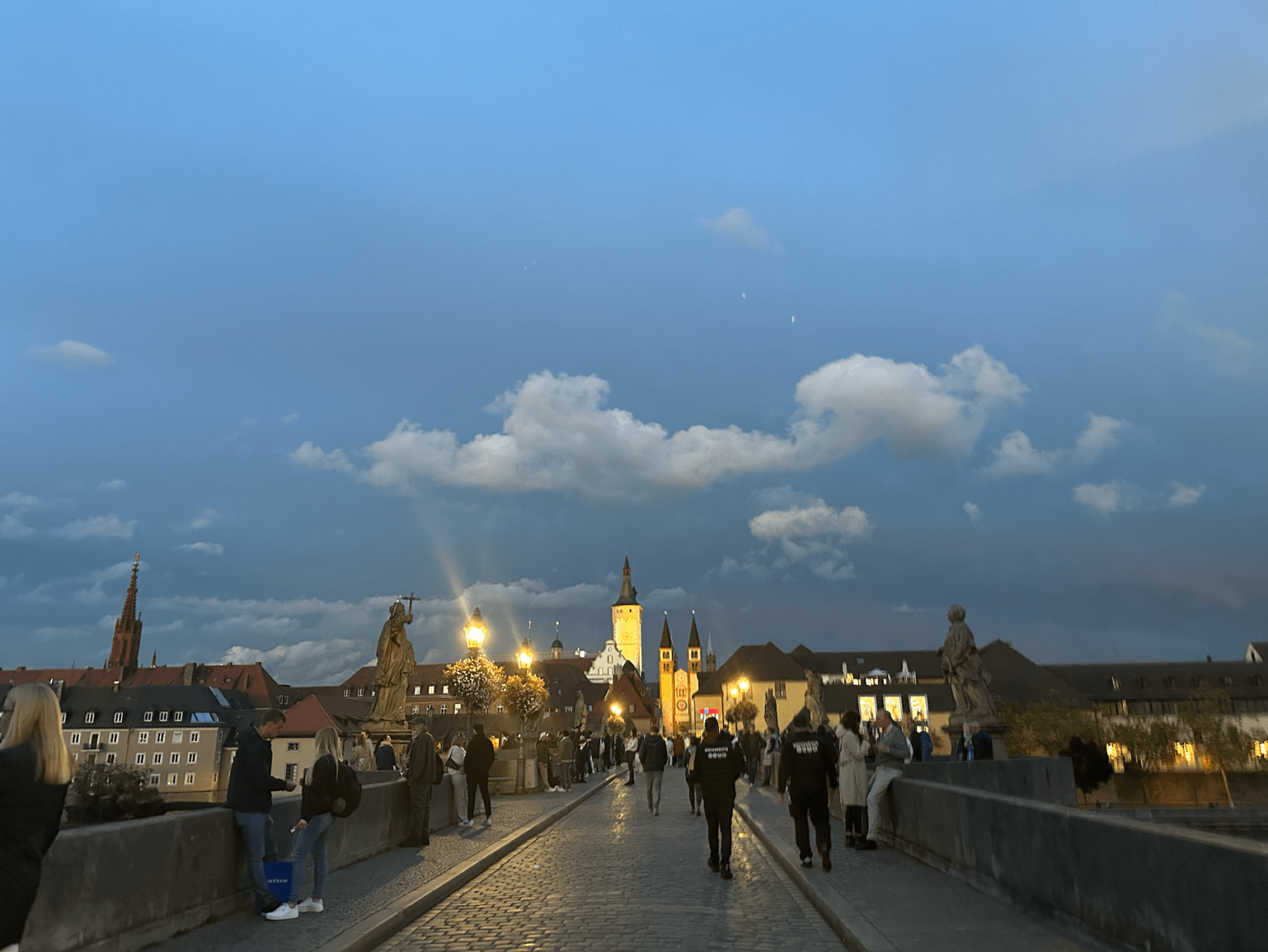
We took a day trip to Würzburg, the first city on the Romantic Road in the north.

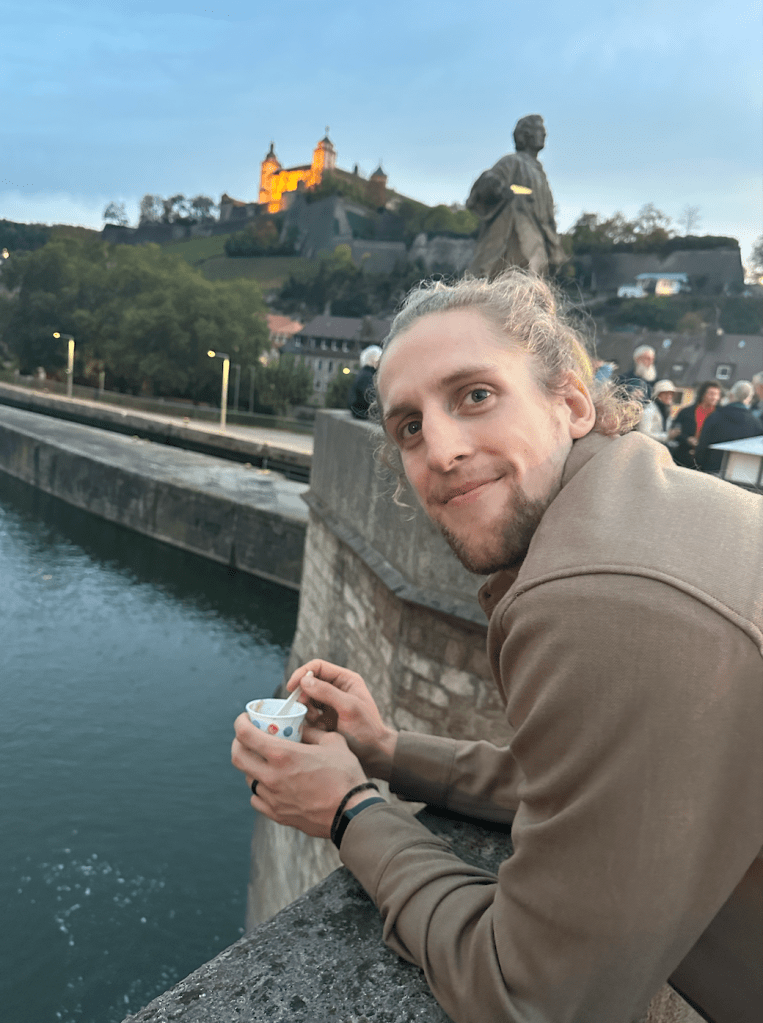
There we visited the Marienberg Fortress, which is a prominent landmark that’s often associated as the symbol of Würzburg. The Bishops of Würzburg lived there for nearly five centuries.

Although the city has been a fort since ancient times, most of the standing structures were built during the 16th and 18th centuries. Following damage during the wars, it was fully rebuilt in 1990.

Our favorite attraction in the city was the Alta Mainbruecke or Old Main Bridge. Leading from the western bank into the heart of the city, the bridge was packed with people standing around mingling, drinking wine, watching the sunset, and listening to music. Two wine bars at the end of the bridge serve wines from the local vineyards. The wine glasses require a 5-euro deposit that is returned when you give the glass back, or people can choose to keep the glass. People also bring their own alcohol and snacks to enjoy on the bridge as well.  
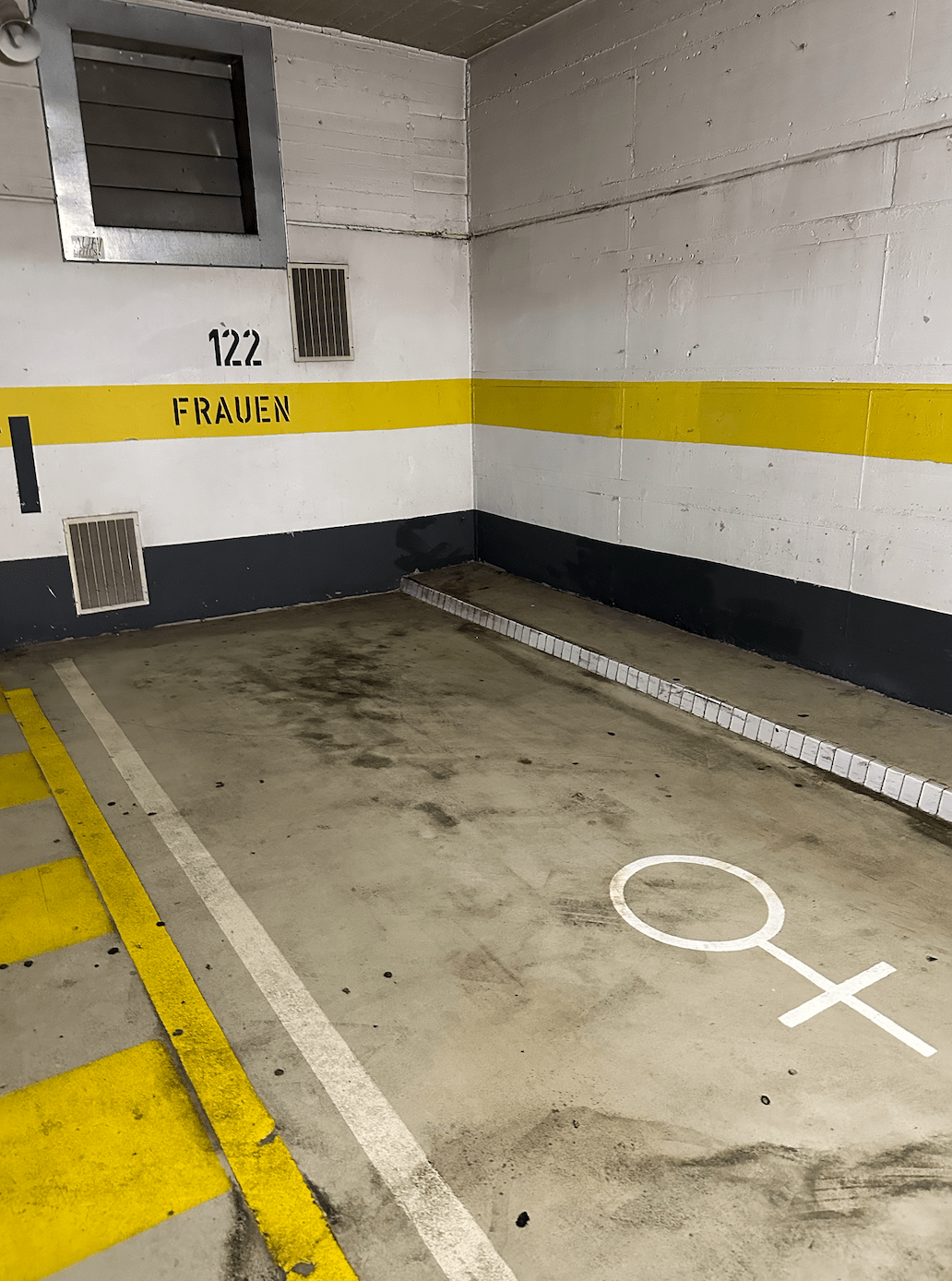
Frauen Parking 

In a parking garage a few weeks ago, we noticed that there were spots that appeared to be specifically for women only. After a bit of research, we learned that women’s parking spots were first introduced in Germany in 1990 to improve women’s safety and reduce the risk of sexual assault.

In some parts of Germany, these spots must be:

  • near the parking facility entrance
  • monitored by a security guard or by video surveillance
  • near an installed burglar alarm
  • 30% of all parking spots must be reserved for women

Following the success in Germany, other countries, like China and South Korea, adopted this parking spot practice.

Originally, the spots were painted pink and larger than a normal spot. People felt this implied women were bad drivers and needed more space.  In response, the German Government said that the closer, bigger spots were so women wouldn’t have to walk as far and would have more room when dealing with kids.

Berlin

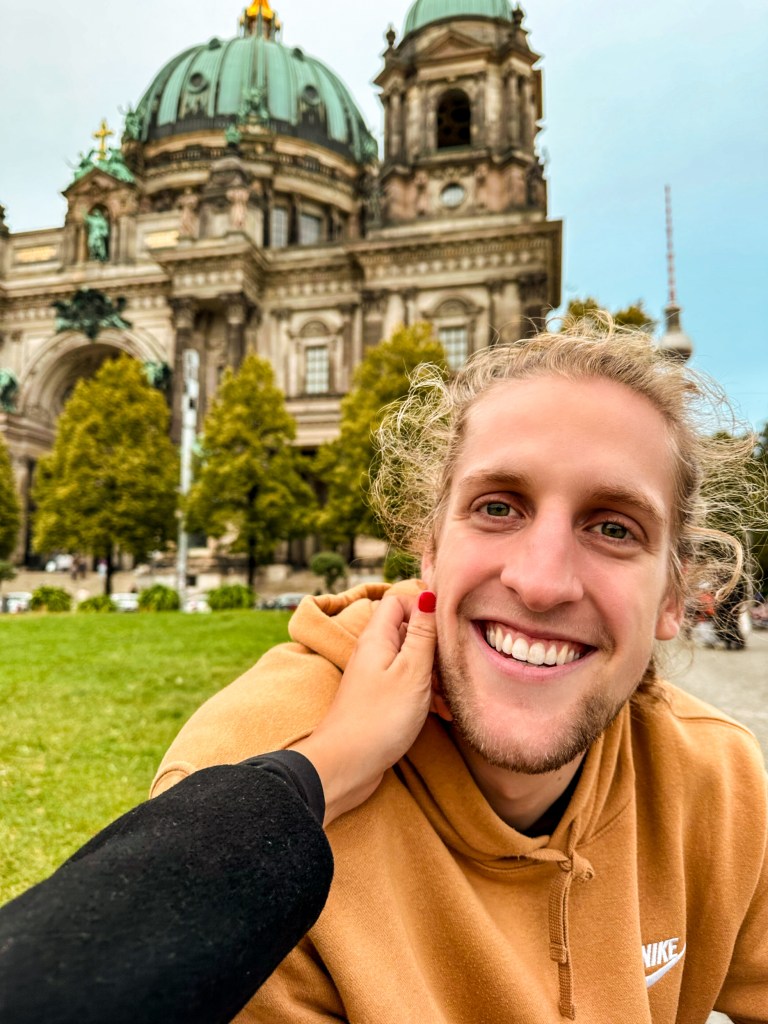
For Brev’s 27th birthday, we were able to spend the weekend in Germany’s Capitol, Berlin.

Our initial impression of Berlin is that it’s a huge city, with lots of history, and a trendy hipster scene.

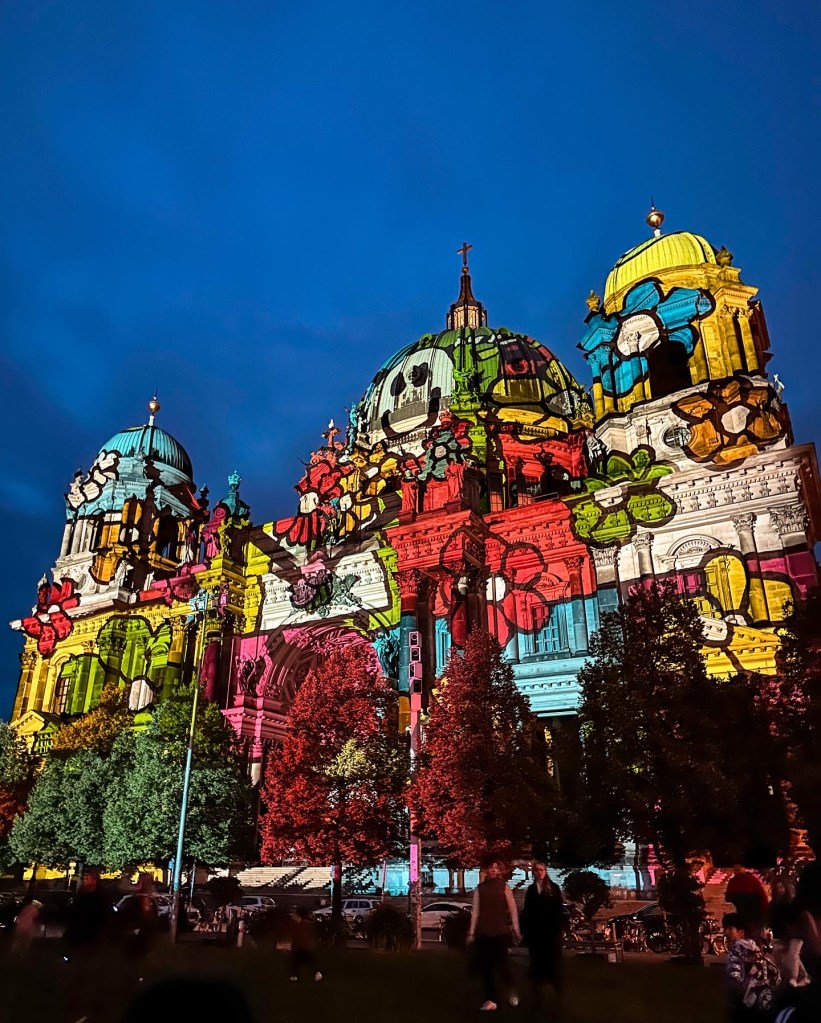
We had so much fun scootering around the city, and we just happened to be there during their Festival of Lights, where photos and images are depicted on the most famous landmarks of Berlin. It was beautiful!

For us, highlights were seeing:

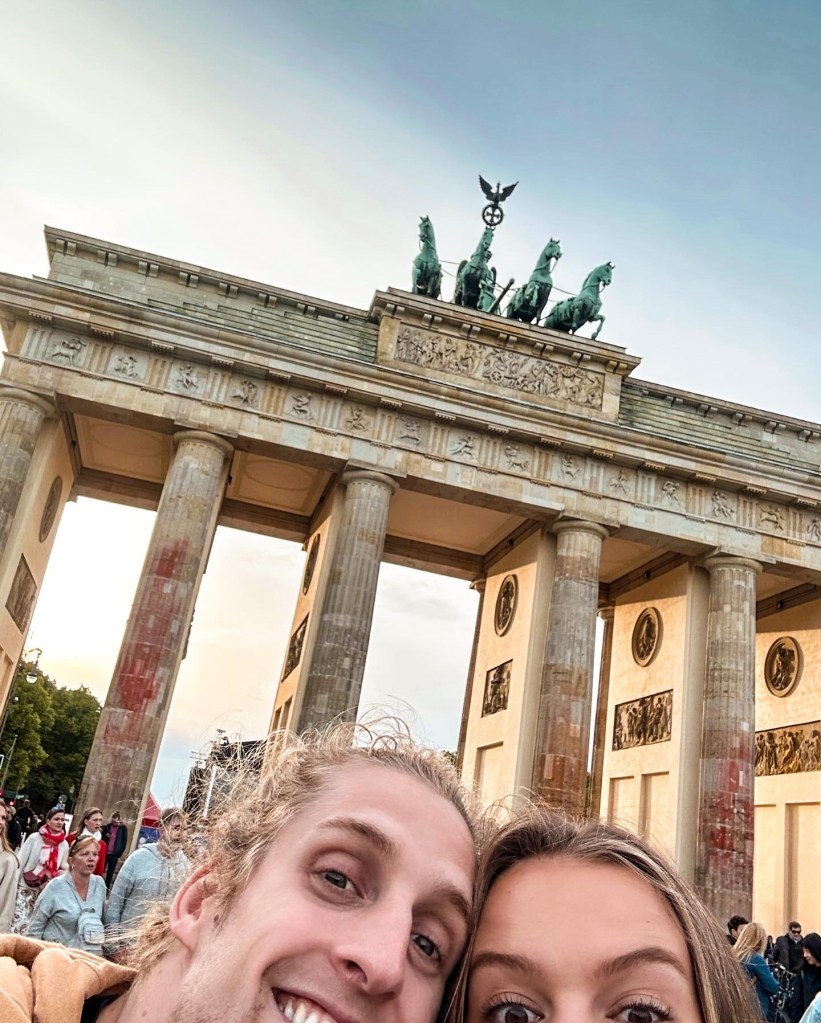
  1. Brandenburg Gate: the only surviving historical city gate that symbolizes Berlin’s Cold War division into East and West and, since the fall of the Wall, a reunified Germany. When the Wall fell, 100,000 people gathered for the Brandenburg Gate’s official opening on 22 December 1989 and weeks later crowds gathered again to celebrate Berlin’s first reunified New Year’s Eve.
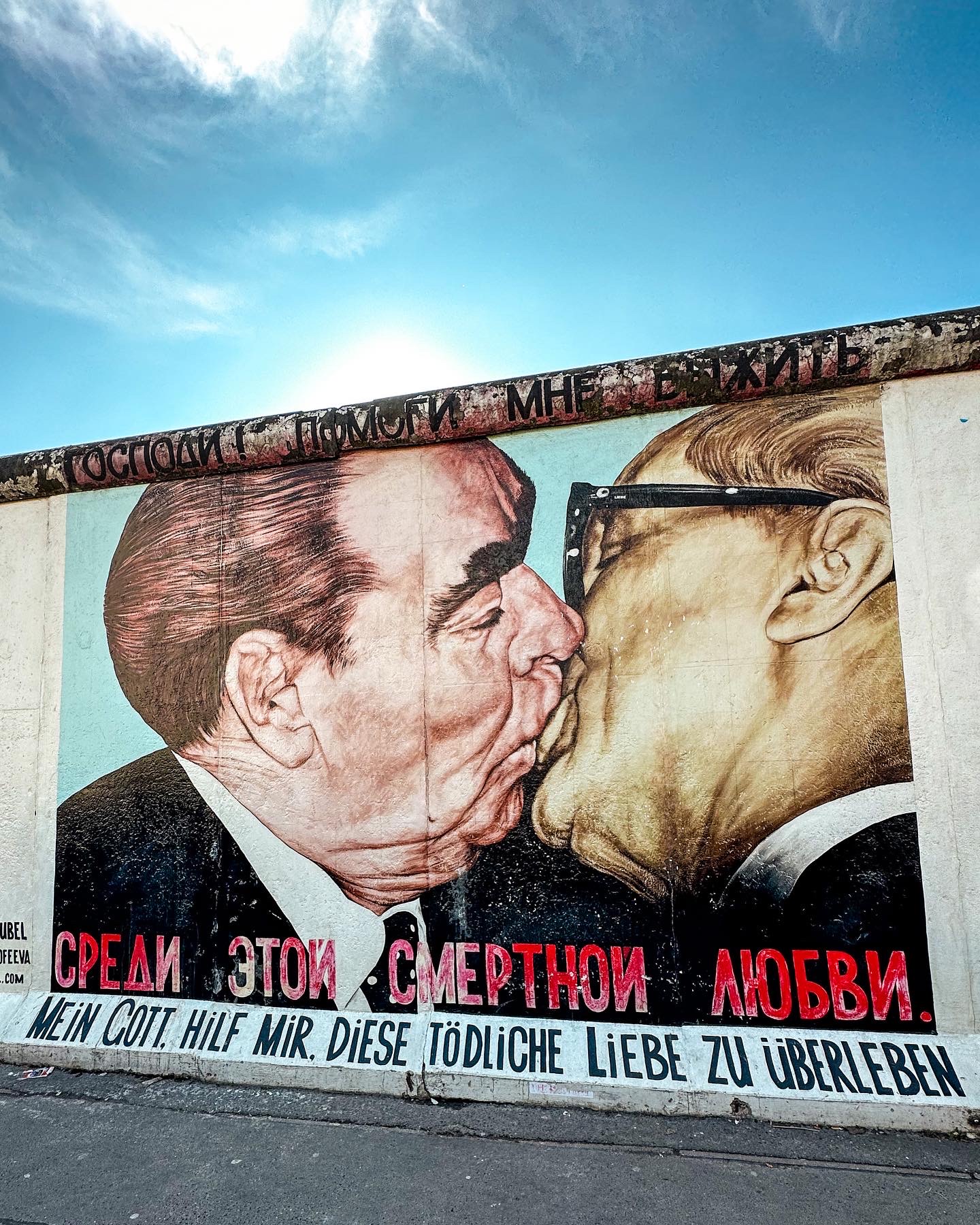
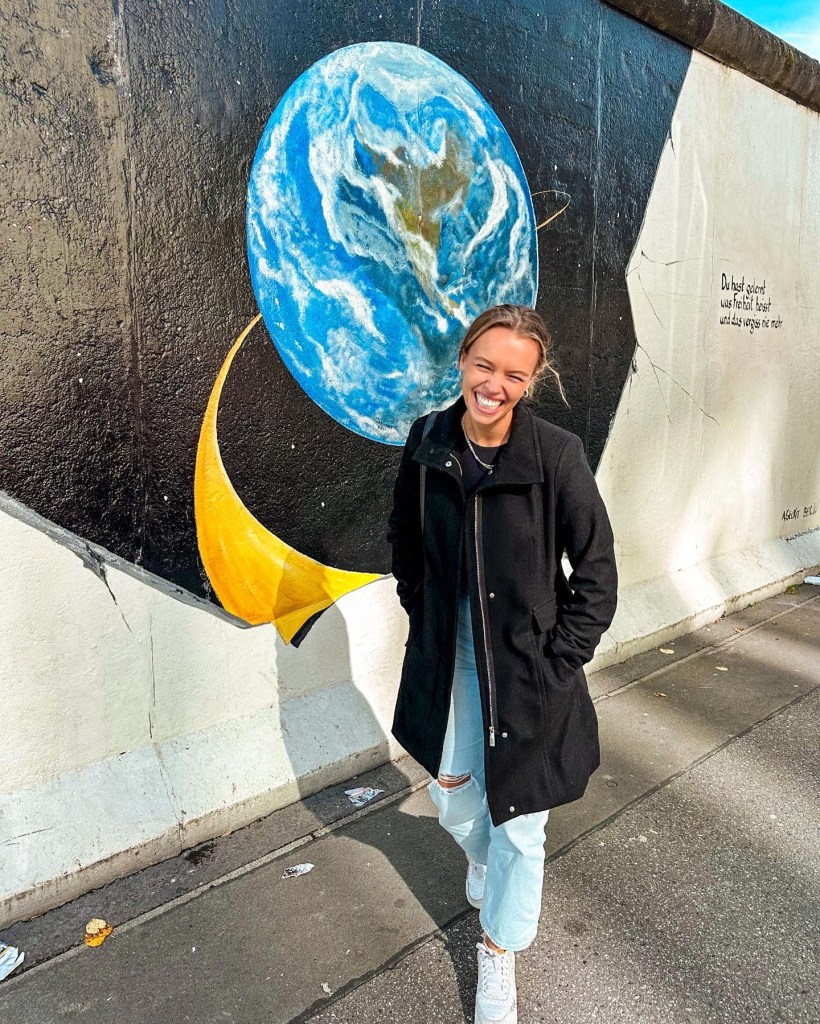
  • The Berlin Wall and East Side Gallery: This section of the Berlin Wall along the river is the longest open-air gallery in the world. Immediately after the wall came down, 118 artists from 21 countries began painting the East Side Gallery, and it officially opened as an open-air gallery on 28 September 1990.
  • The Berlin Television Tower: Also called Fernsehturm, this is the tallest building in the city that offers panoramic views of Berlin.
  • Berlin Cathedral: This beautiful, ornate protestant church goes back to the 15th century, it was severely damaged in WW11 and full restoration was only completed in 1993. Brev and I sat outside the church at the popular Lustgarten square and enjoyed bands busking and the festival of lights.

Munich: Viscardigasse

On our walking tour of Munich, we saw the Feldherrnhalle, which became a monument for Hitler’s movement.

When the Nazi party rose to power, Hitler declared the Feldherrnhalle a national monument. Anyone walking past it was required to give the Nazi salute, and armed officers were there to ensure that everyone did so.

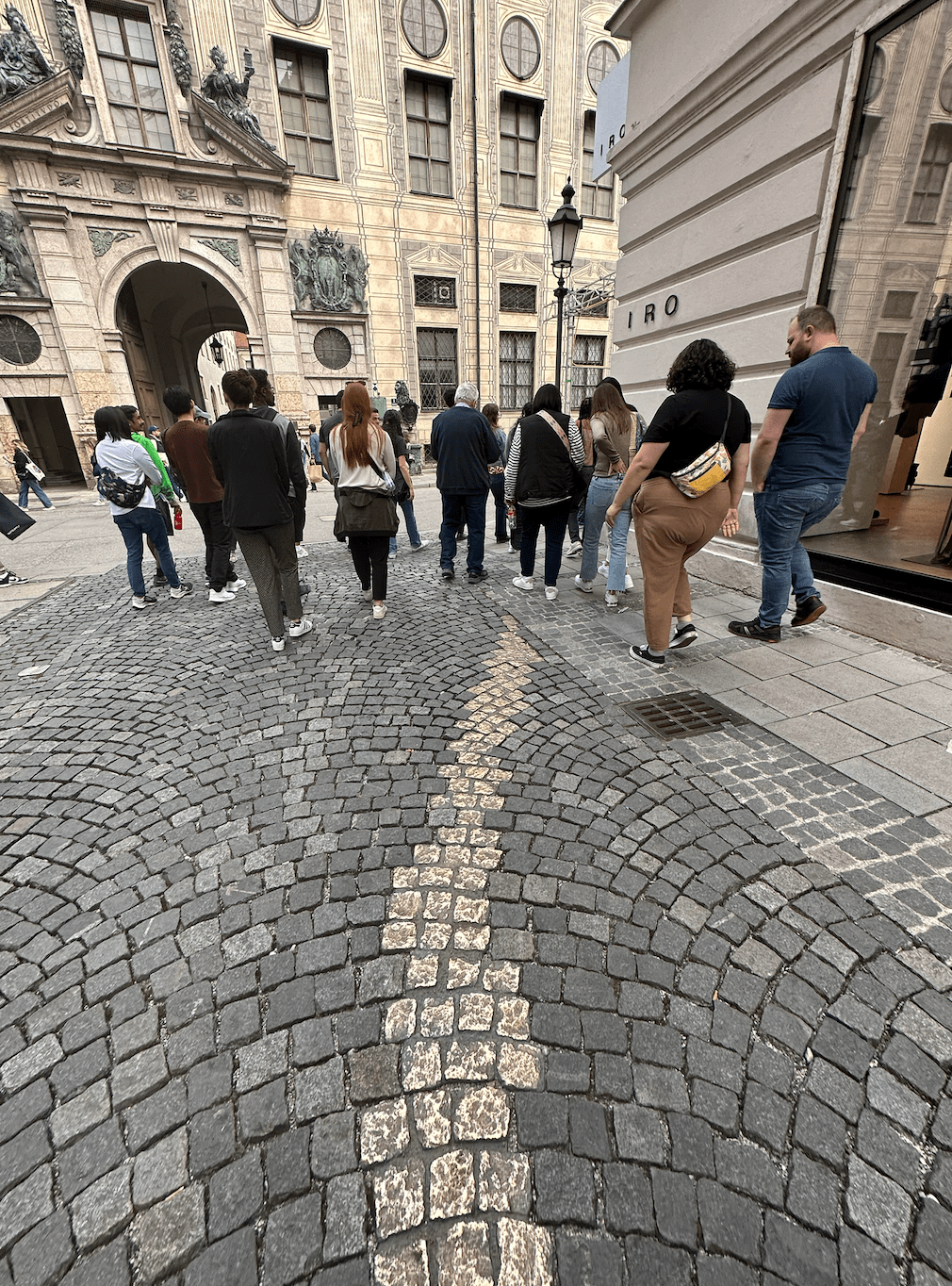
The nearby Viscardigasse alley, directly behind the monument, provided an alternate route for those that refused to show their support.

Today this alley is a pedestrian-only walkway with bronze bricks to commemorate the brave Germans who refused to give Hitler even the satisfaction of a salute.

Lebkuchen

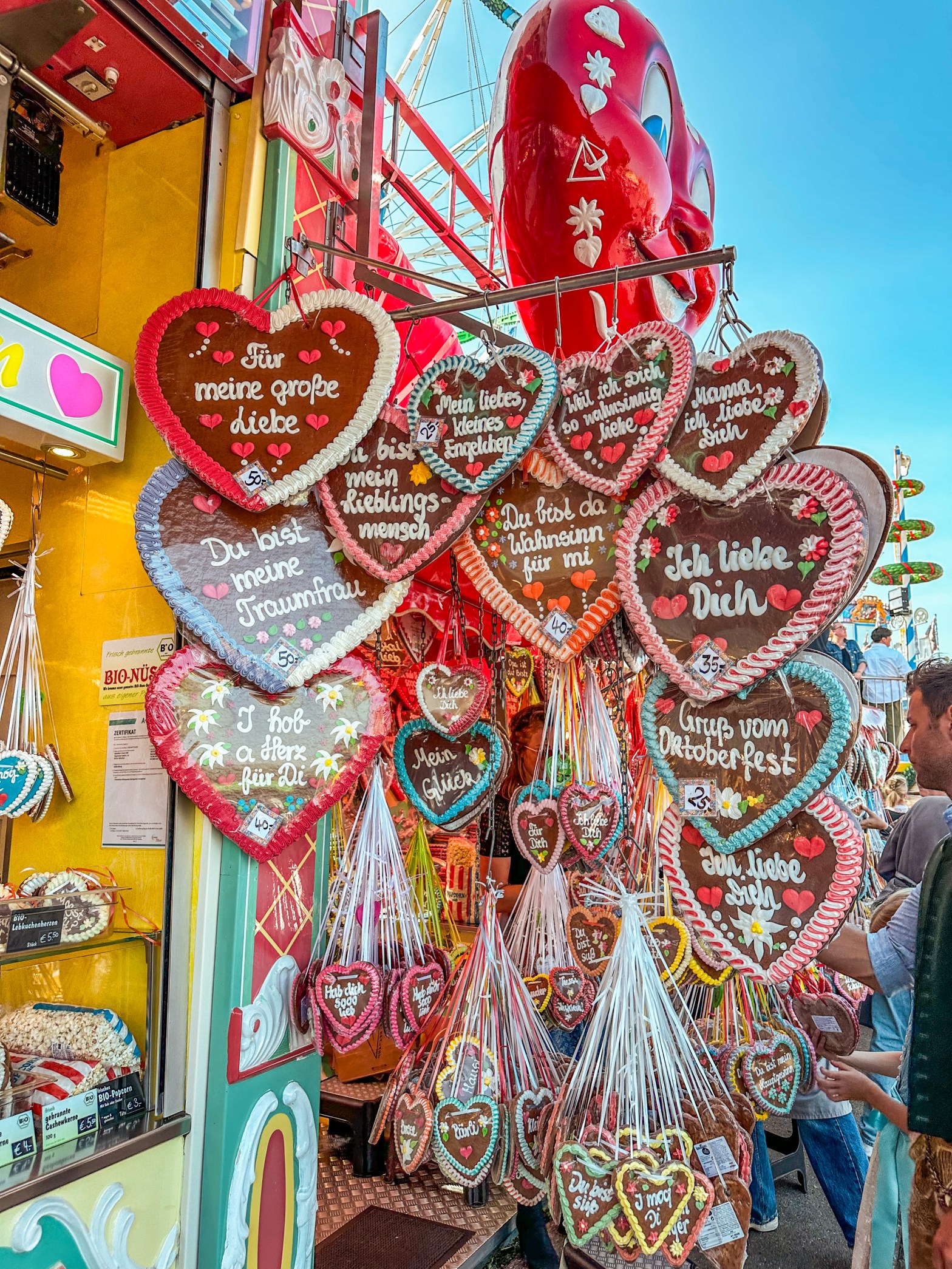
During our travels throughout Germany, we have seen many Lebkuchen (especially at Oktoberfest).

Lebkuchen is a large heart shaped gingerbread cookie that includes sweet sayings or humorous messages on it.

Originally, these cookies were created by 13th century by monks in Franconia, Germany and grew to be a tradition throughout Germany.

On the official Oktoberfest website, I found a recipe in case anyone wants to make their own German Lebkuchen at home:

  • 200g butter
  • 550g honey
  • 250g sugar
  • 1 pinch of gingerbread spice
  • 30g cocoa powder
  • 1,200g flour
  • 1 pinch baking powder
  • 2 eggs
  • 1 pinch salt

Combine the ingredients and leave to stand at room temperature for an entire day. Roll out into a heart and bake a 392 °F) in a preheated oven for about 12 to 15 minutes. Then decorate with icing.

Munich: The 188th Oktoberfest

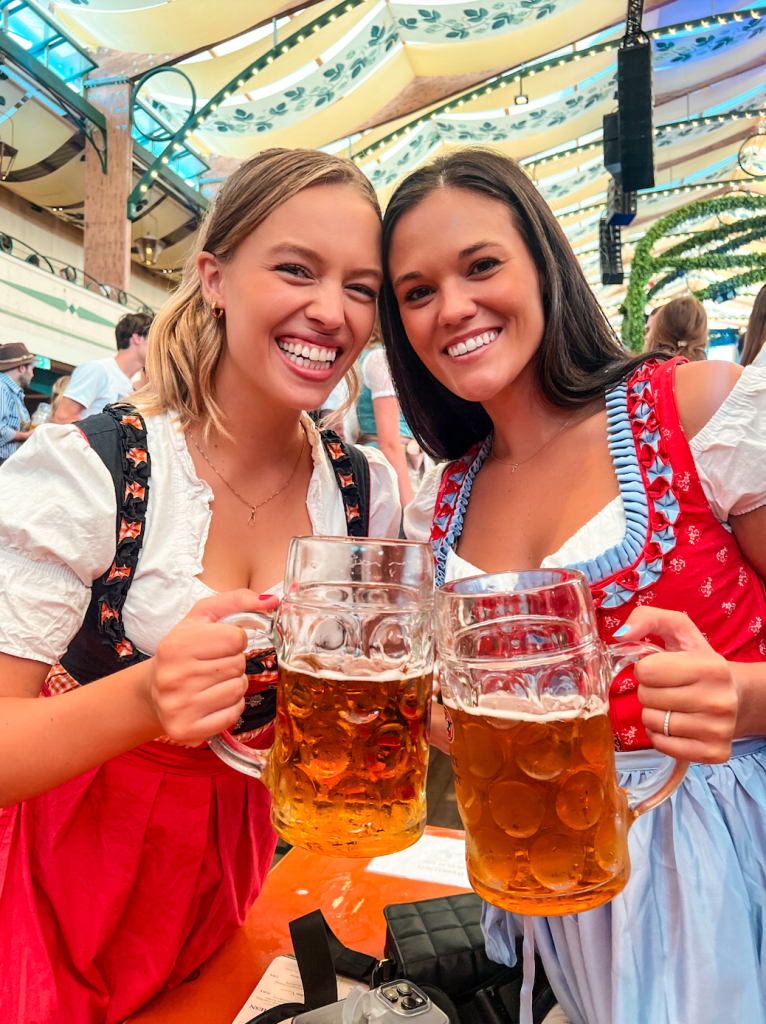
When I found out we were moving to Germany, I knew I had to get to Oktoberfest. Brev had basketball games and no time off, so sadly he couldn’t join me. However, I was able to meet up in Munich with a friend I met last year in Belgium. We had so much fun! And yes, we did wear the traditional German dirndls.

To make the weekend even better, some of my family friends were also visiting Munich and we were able to join them at their table at Oktoberfest. (Thanks Noreen!).

Oktoberfest Fun Facts:

  • Oktoberfest began in 1810 to celebrate the marriage of the crown prince of Bavaria to Princess Therese von Sachsen-Hildburghausen.
  • At the start of Oktoberfest, the mayor of Munich taps the first keg at the Schottenhamel Festhalle tent. No beer can be served until this official keg is tapped, and gunshots are then fired to signal to the other tents that they can begin serving beer.
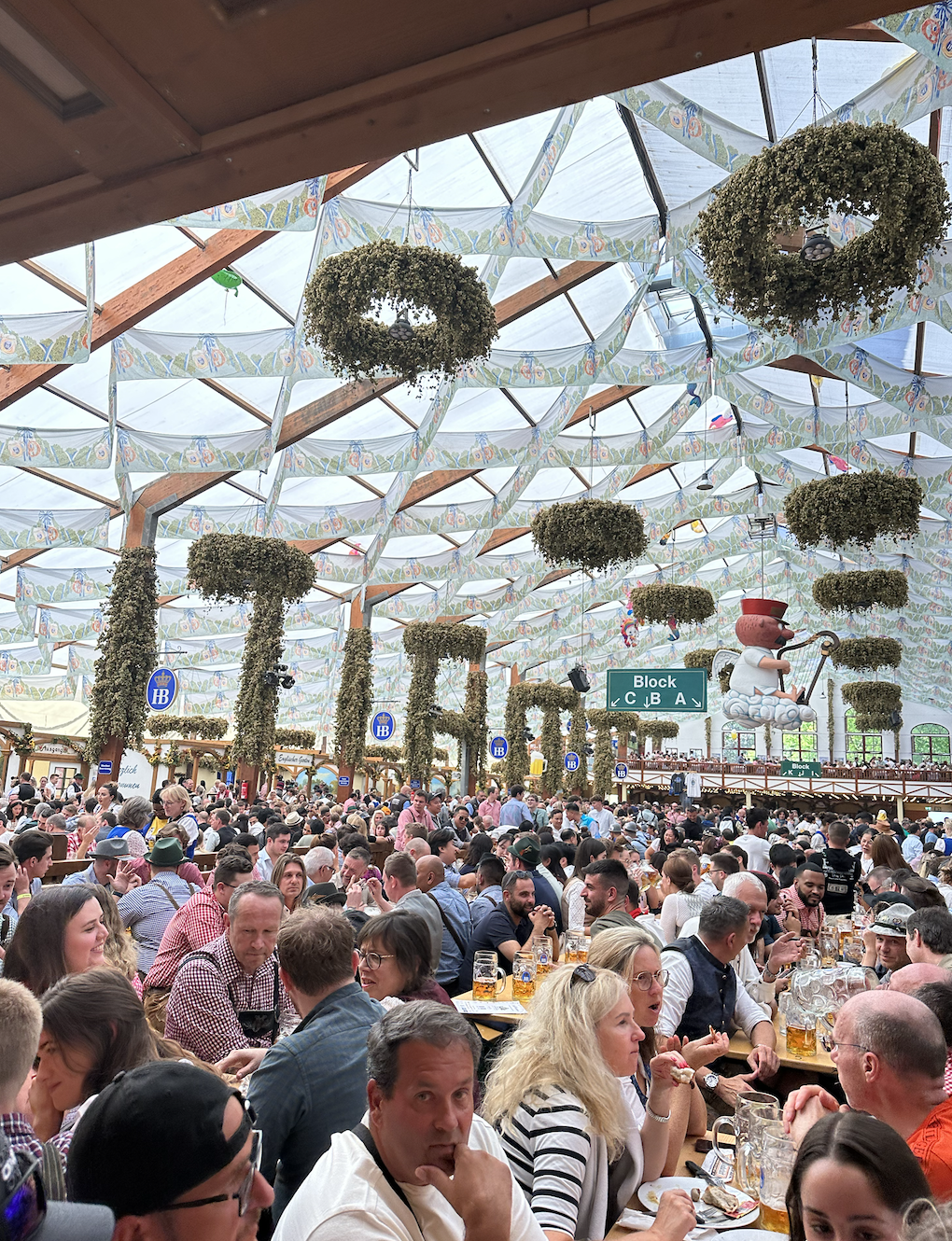
  • Like a fair back home, Oktoberfest has tons of rides, concessions, and games. But what makes it different is the many festival “tents” that each house their own band, beer, and long wooden tables. In total, these festival tents host about 120,000 people to drink beer and sing.
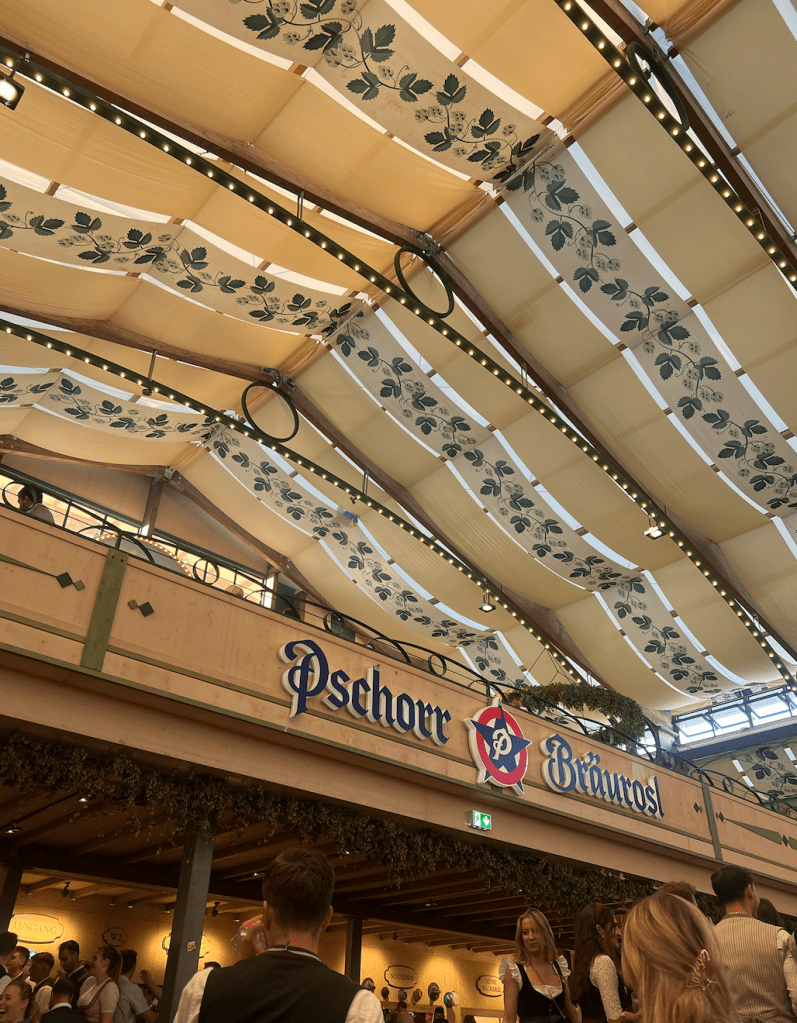
  • Each tent has its own vibe, from international to traditional or relaxed to standing on the benches and rowdy.  We were in the Pschorr Bräurosl tent and had a blast! The tents are owned by one of the big six breweries themselves or by private owners.
  • These six Munich breweries are the only ones allowed to serve their beer at Oktoberfest: Hofbräu, Augustiner, Hacker-Pschorr, Löwenbräu, Paulaner and Spaten.
  • The official Oktoberfest steins hold one liter of beer, which is basically three cans. They also weigh a whopping 5 pounds, which makes it even more impressive that the servers in the tents would hold many, many beers at a time!

If you get the opportunity to go to Oktoberfest, take it!

Nuremberg Castle

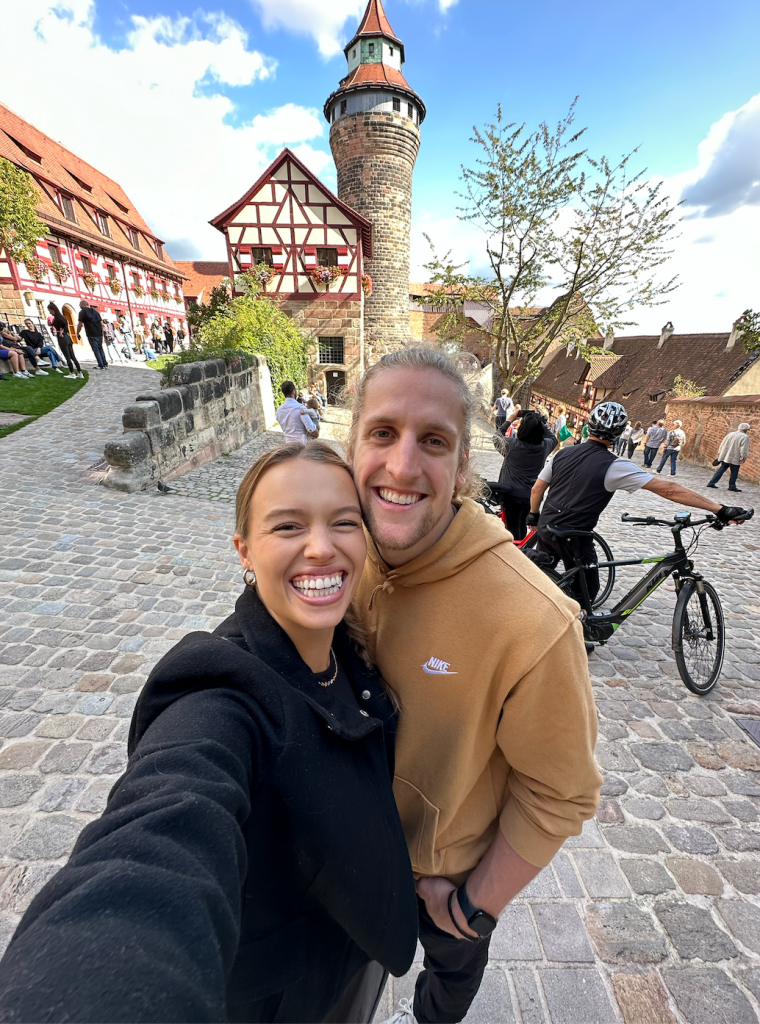
On another Sunday off, we visited Nuremberg and spent some time at the city’s castle.

The castle is a group of medieval buildings on a ridge in the historical center of Nuremberg. It was once an important part of the Holy Roman Empire and was considered one of the best medieval fortifications in Europe.

In the Middle Ages, the Holy Roman Emperors (which were German Kings coronated by the Pope) didn’t have a home base. Instead, they journeyed from castle to castle to maintain their rule. Every German King stayed at Nurmberg Castle at some point because of its strategic position within Bavaria.

During WWII, air raids destroyed a large part of the castle. It took about 30 years to rebuild.

Today you can take a tour of the buildings, which Brev and I did. We learned about:

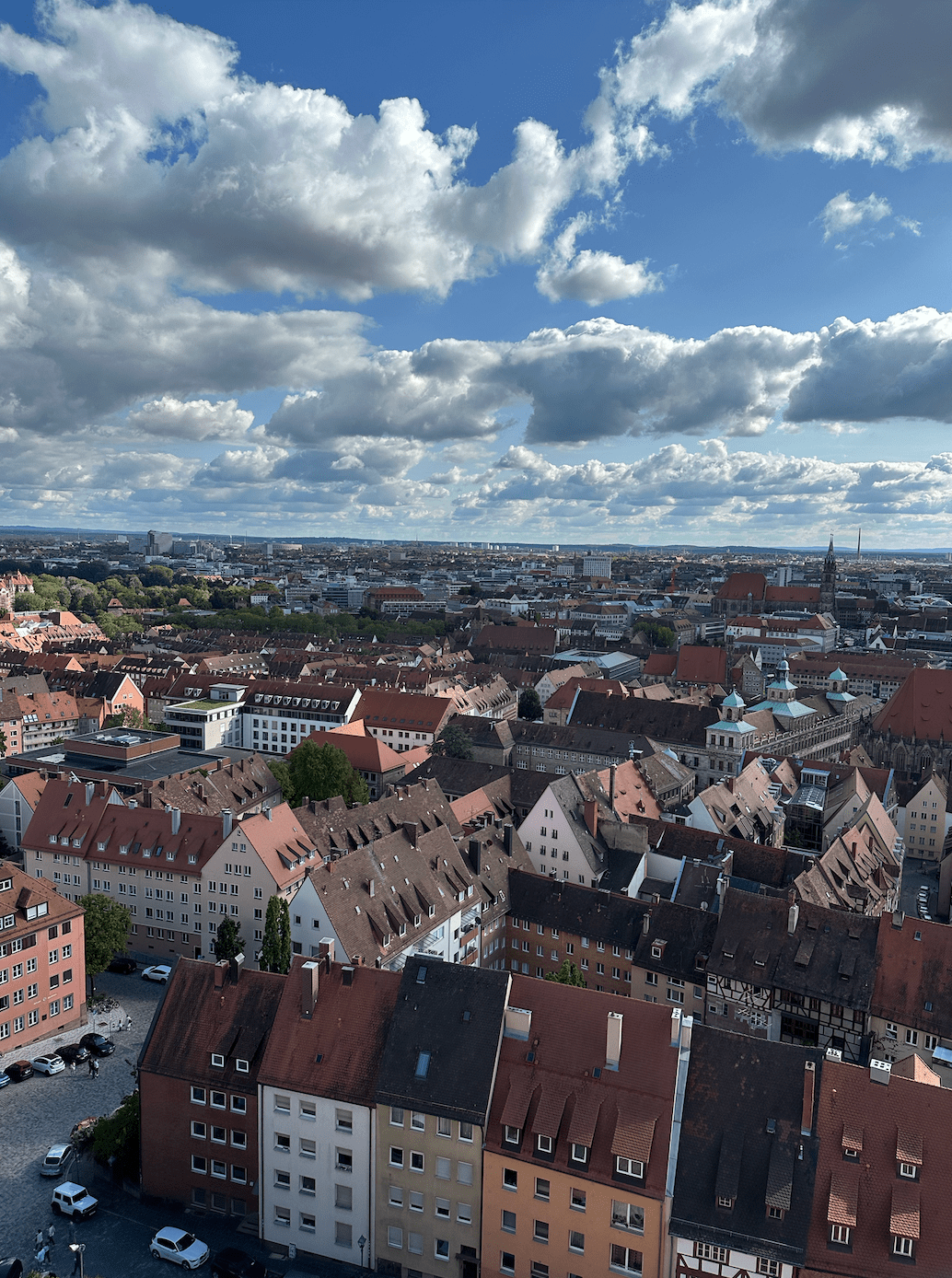
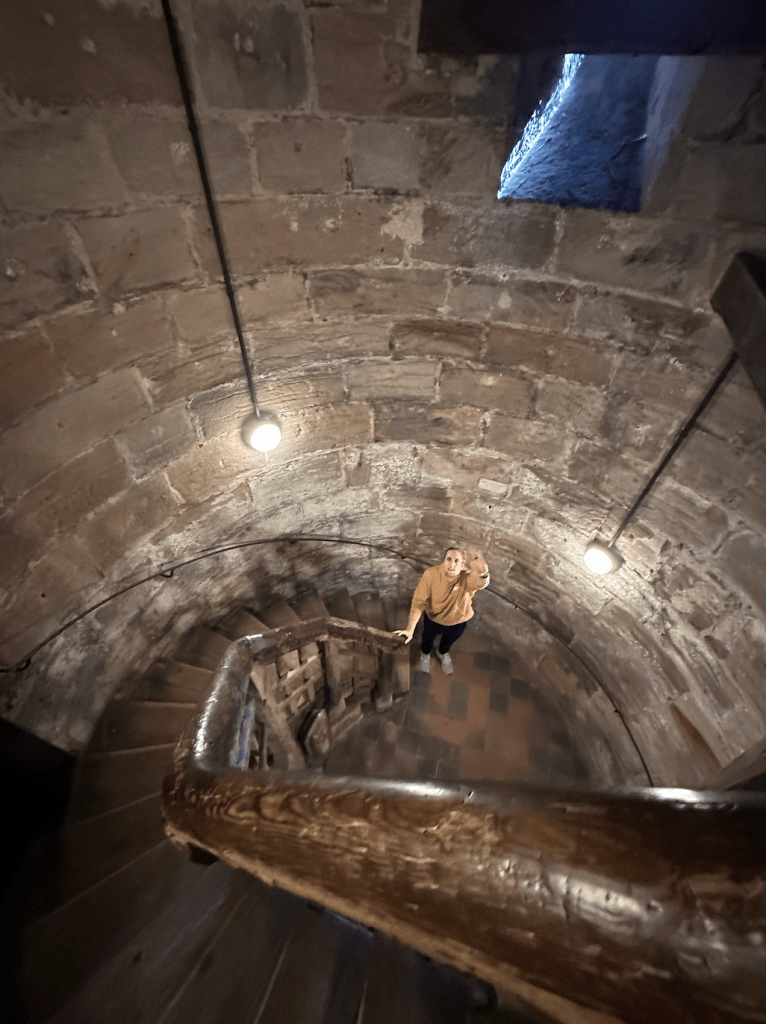
  • The Sinwell Tower: built in the 13th century, this tower served defensive and status purposes. Today it has a viewing platform with panoramic views of the city. There are also photos of what the city looked like following WWII, which you can compare to the rebuilt city that we see today.  
  • The Deep Well: a small timber house which holds the castle’s only source of water, with a shaft 165 feet down. When the emperor would visit, additional water would need to be brought in on wagons from the city.
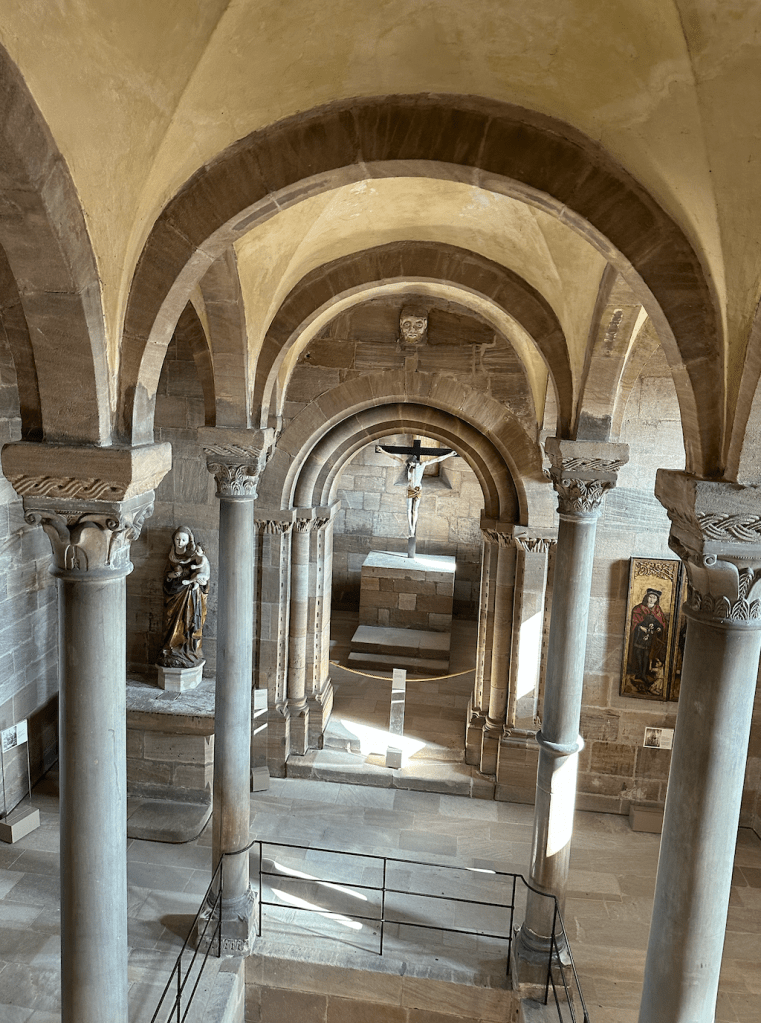
  • The Imperial Chapel: Romanesque double chapel with two chapels on top of each other, the higher chapel for the nobility and the lower story chapel for the commoners. There’s an opening in the ceiling connecting the two.

Rothenburg

Because Brev usually has Sundays off, that’s when our day trips typically happen. A couple Sundays ago we visited Rothenburg ob der Tauber.

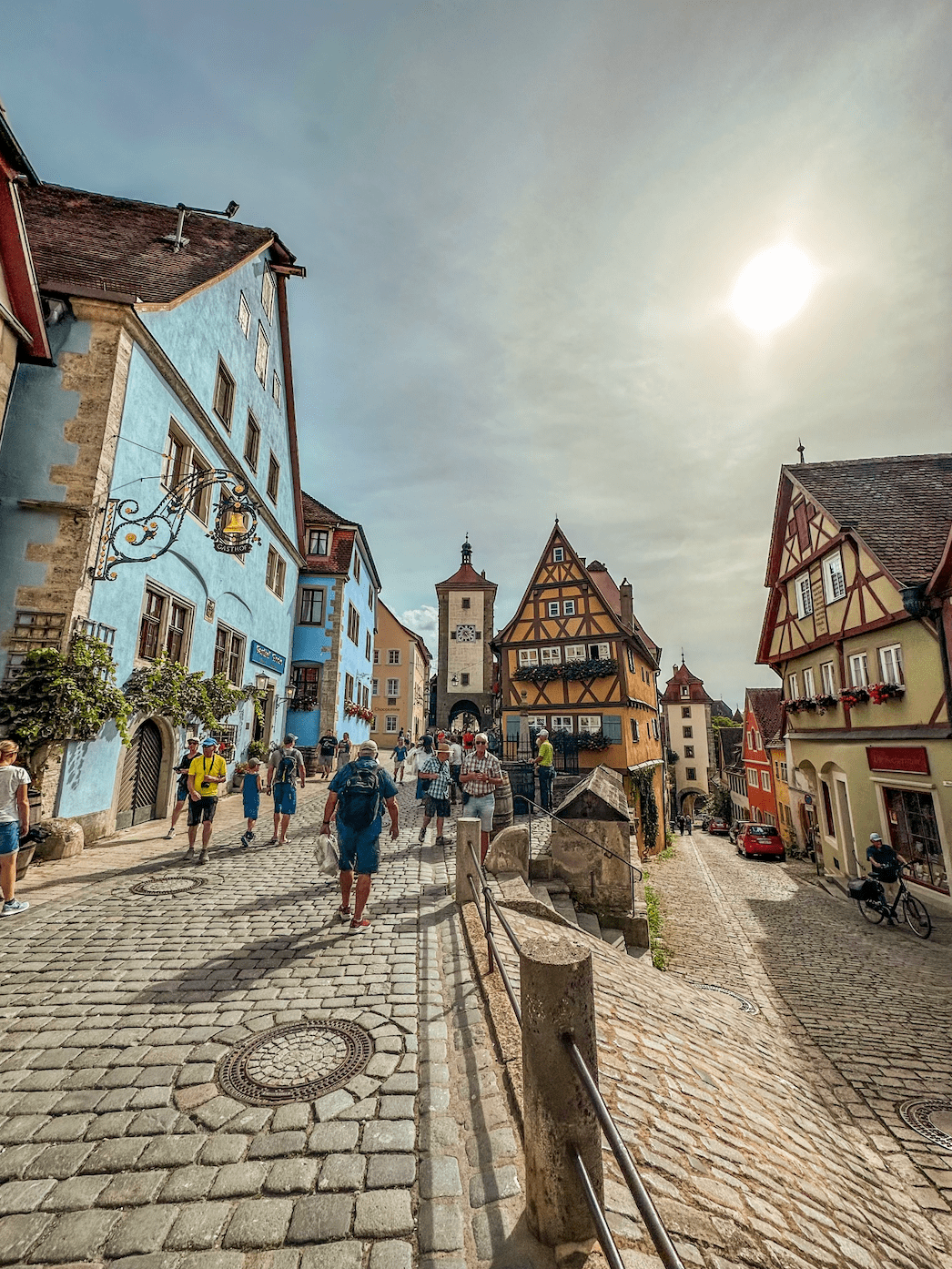
Rothenburg is one of the cities on Germany’s famous Romantic Road and one of three towns in Germany with its entire city walls still intact.

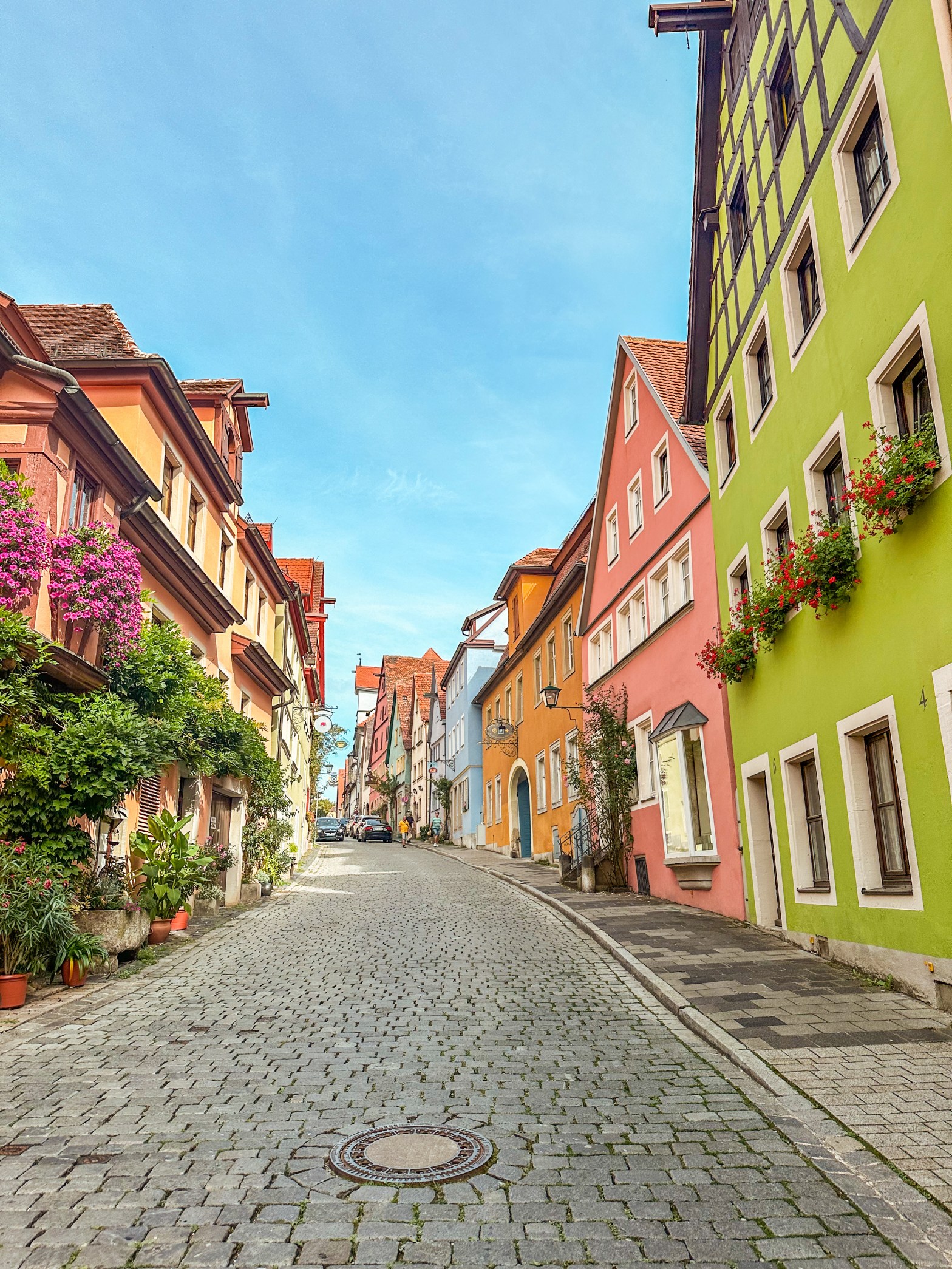
Rothenburg is so charming! It has many of the colorful buildings that Bavaria (a southern German state) is known for.

During WWII, the city was attacked by the allies. After the initial attack, the US assistant Secretary of War ordered the soldiers to not use artillery when taking the city. Instead, soldiers marched in and asked the city to surrender to preserve Rothenburg.

Facts

  • Rothenburg was a Free Imperial City of the Holy Roman Empire from 1274 to 1803
  • Rothenburg was the epitome of the German “hometown” for the Nazi ideologists
  • About 32% of the town had to be rebuilt following the bombings in WWII
  • The staple pastry of Rotheburg is the Schneeball, a deep friend dough ball covered in confectioner’s sugar or chocolate
  • Pope Francis studied German in Rothenburg in 1986

Romantiche Stasse (Romantic Road)

Romantic Road is a picturesque 290-mile route that travels between the German cities of Wurzburg and Fussen.

The route passes through what is often labeled as quintessential German scenery and culture, which is why it’s one of the biggest magnets for tourism in the southern provinces of Bavaria and Baden-Württemberg. This makes Romantic Road an important economic part of Southern Germany, creating about 5 million overnight stay and 15,000 jobs.

On Romantic Road there are walled cities like Rothenburg, Nordlingen, and Dinkelsbuhl and castles like Burg Harburg and Neuschwanstein. Each more beautiful than the last.

Additionally, Romantic Road has a partnership with Japan. To promote tourism and highlight beautiful Japanese cities, they made a Romantic Road in Japan. This is why some of the signs on the Romantic Road in Germany feature Japanese kanji.

Schwäbisch Hall

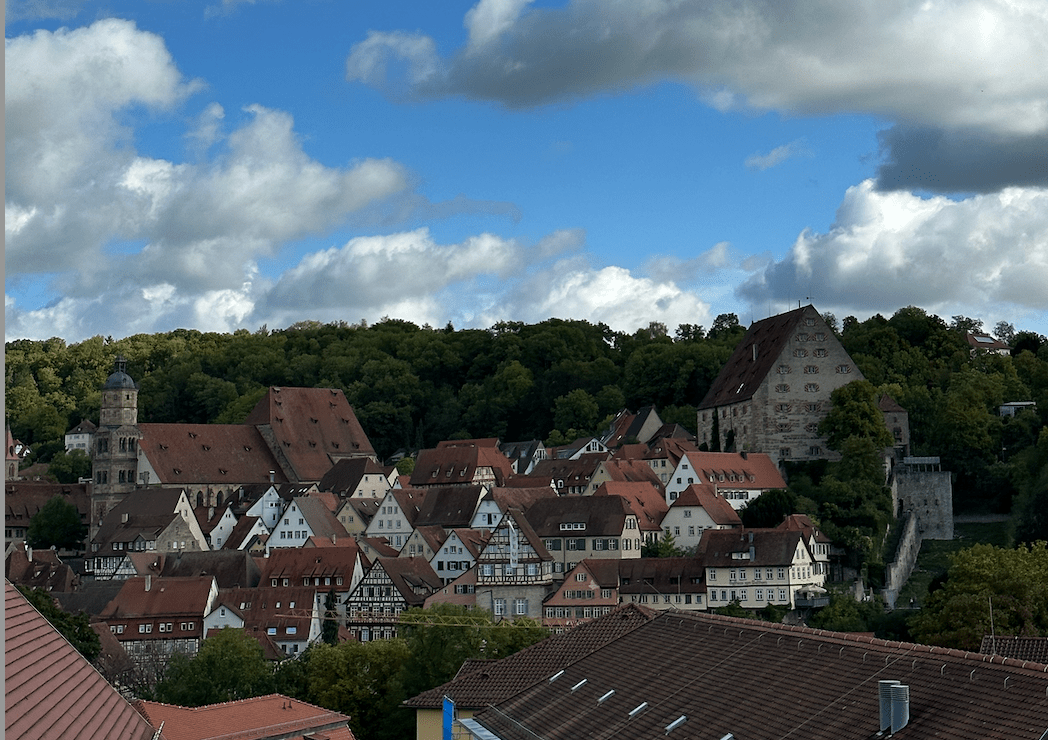
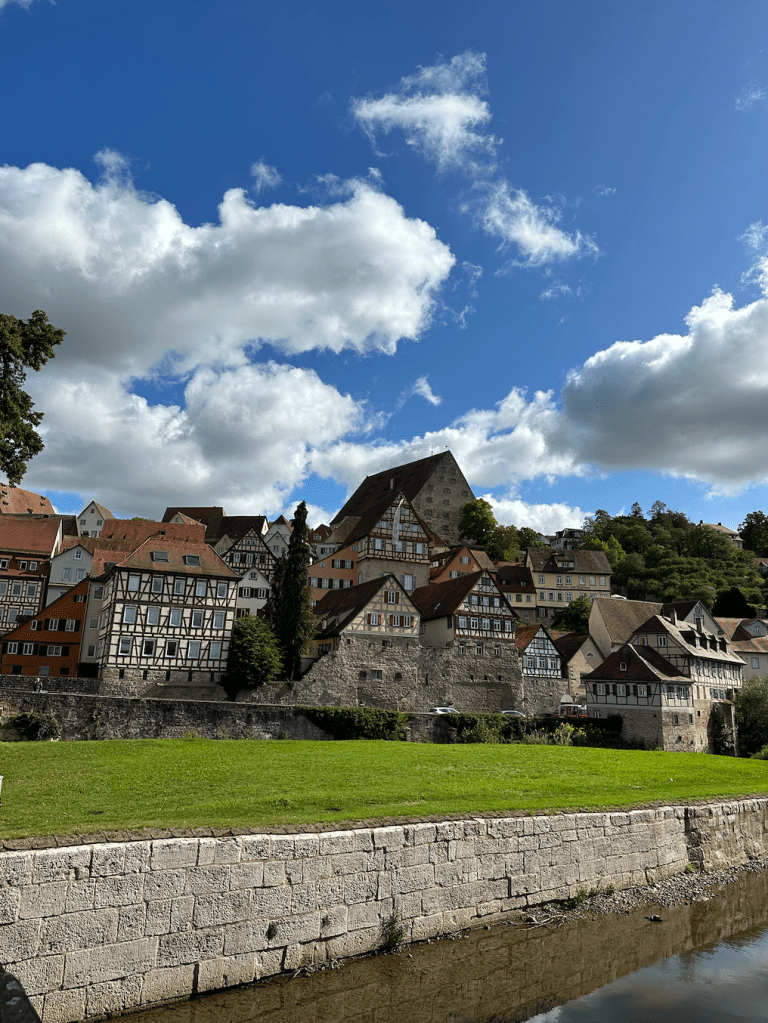
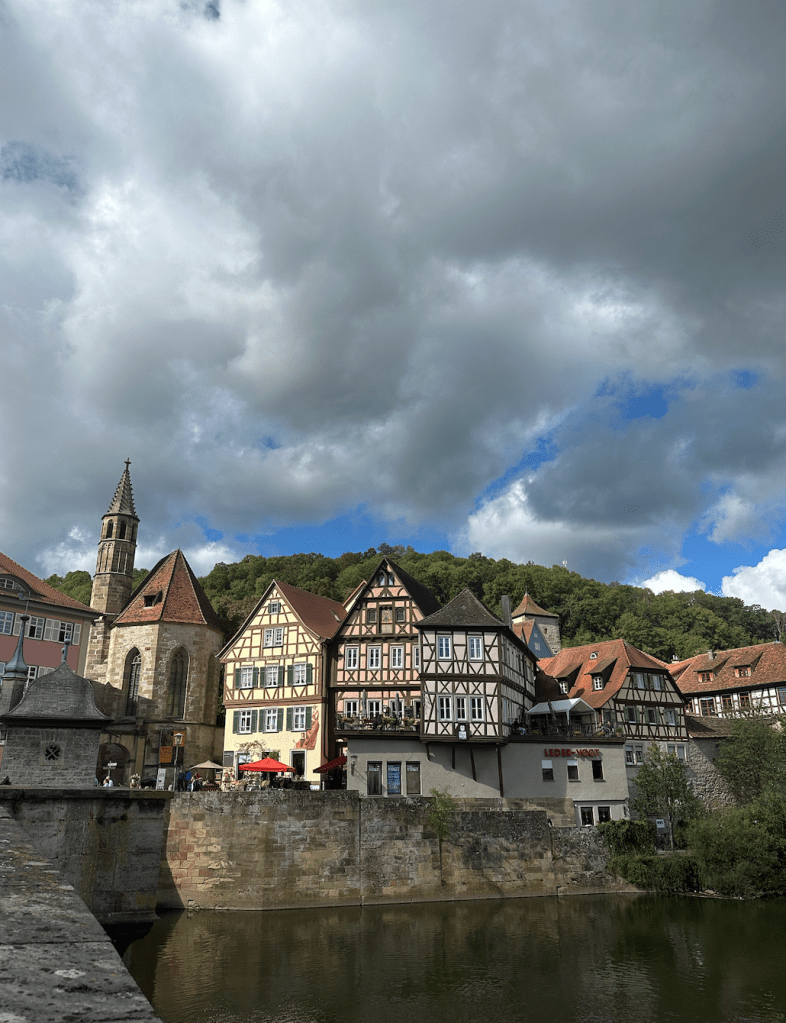
A few weeks ago, we visited nearby Schwäbisch Hall, which is a picturesque city with medieval flair.

Its timber looking buildings extend up the hills from the Kocher River. Today you can still see most of the original architecture in varying styles, like the Romanesque-Gothic Saint Michael’s church and the Baroque town hall.

Previously, Schwabisch Hall was wealthy and important because it was founded on salt, aka “white gold” of the medieval times. 

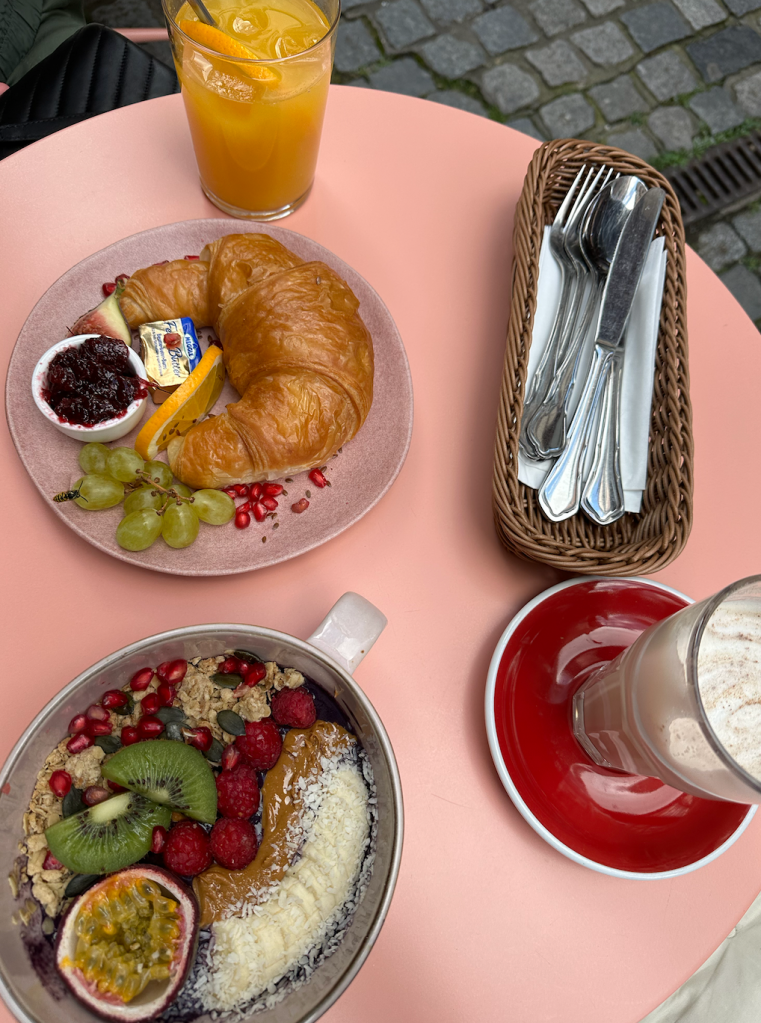
We enjoyed walking around the city and a great brunch at Café Heimweh.

Design a site like this with WordPress.com
Get started