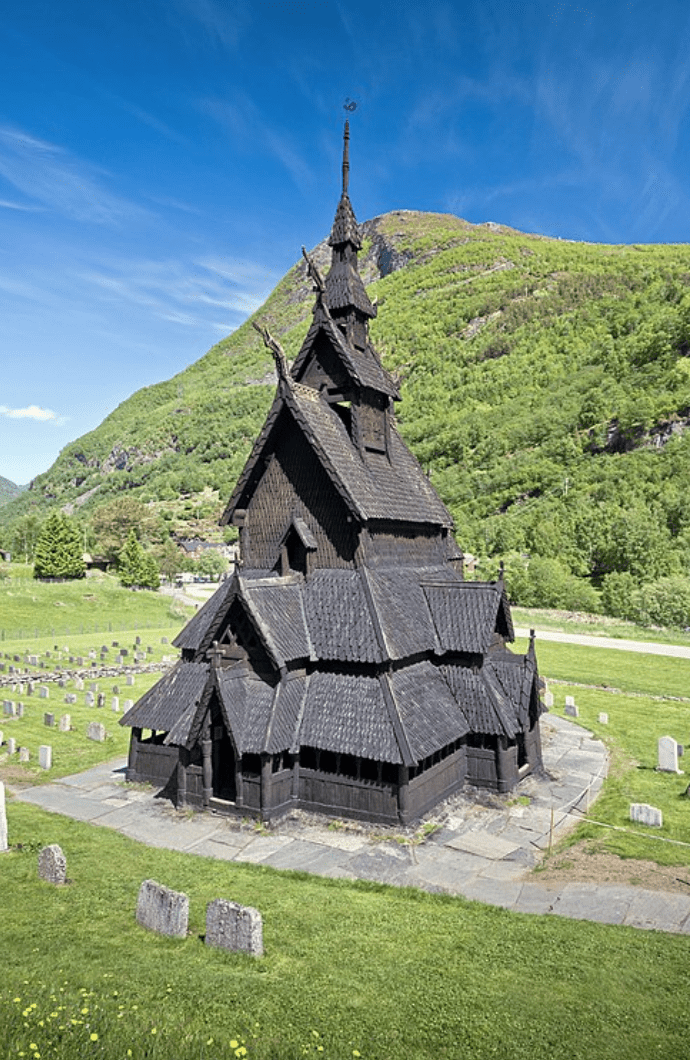
The Christianization of Scandinavia took place between the 8th and 12th centuries. Norwegians had a distinct style of religious architecture known as the Stave Church. They were called Stave Churches because of their corner-posts, called staves, and their framework of timber with planks on sills, called stave walls.
There were once 1,300 stave churches in existence. Sadly only 28 churches remain, with the most famous being the Borgund Stave Church in Norway, which is included in most art history textbooks.
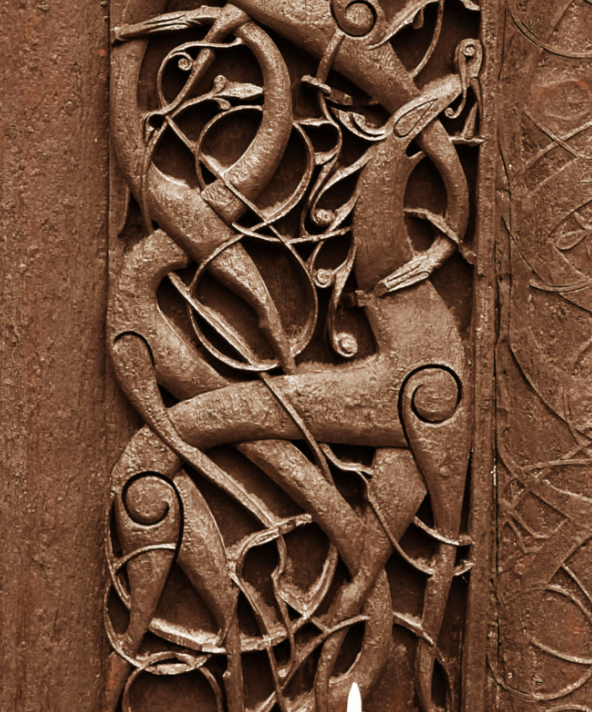
These churches were made of wood and therefore are smaller than the soaring stone Gothic Cathedrals located in more southern parts of Europe. They include intricate carvings with Norse gods, animals and dragons coexisting with the Christian God and iconography.
Also, like most old Christian churches, Stave Churches were built on sacred Norse ground. In olden times Norse “religion” was practiced outdoors in sacred groves, by an altar, or in a hov which was a great room or the hall of the richest farmer in the village.
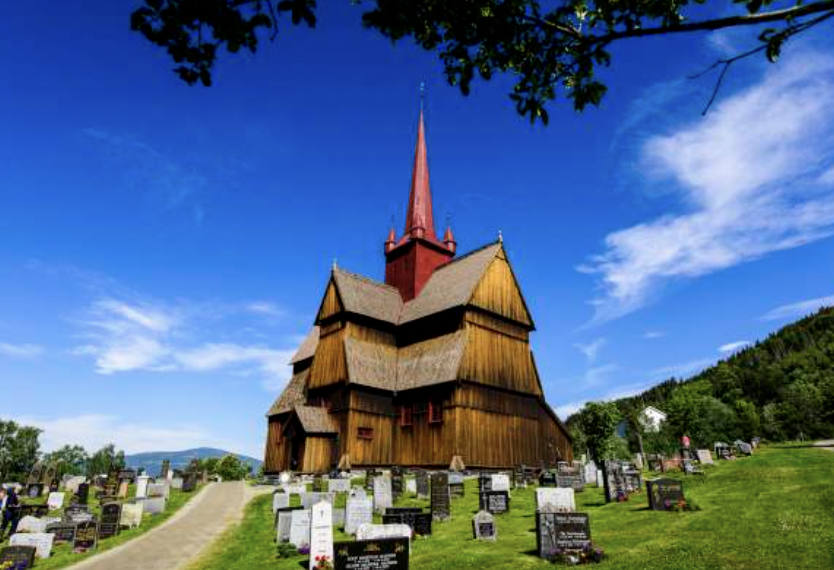
Sadly, we were not able to see the most famous Stave Churches while in Norway. However, we did see a few smaller churches in a similar style.
The churches we visited, although pretty in their own way, were much less ornate than the Catholic cathedrals in other European cities. The small, fairly unadorned, clean design reflects Scandinavian lifestyle and design to this day.
 The Jo Show
Thank you for sharing these posts and the beautiful pictures of the various churches!
LikeLike