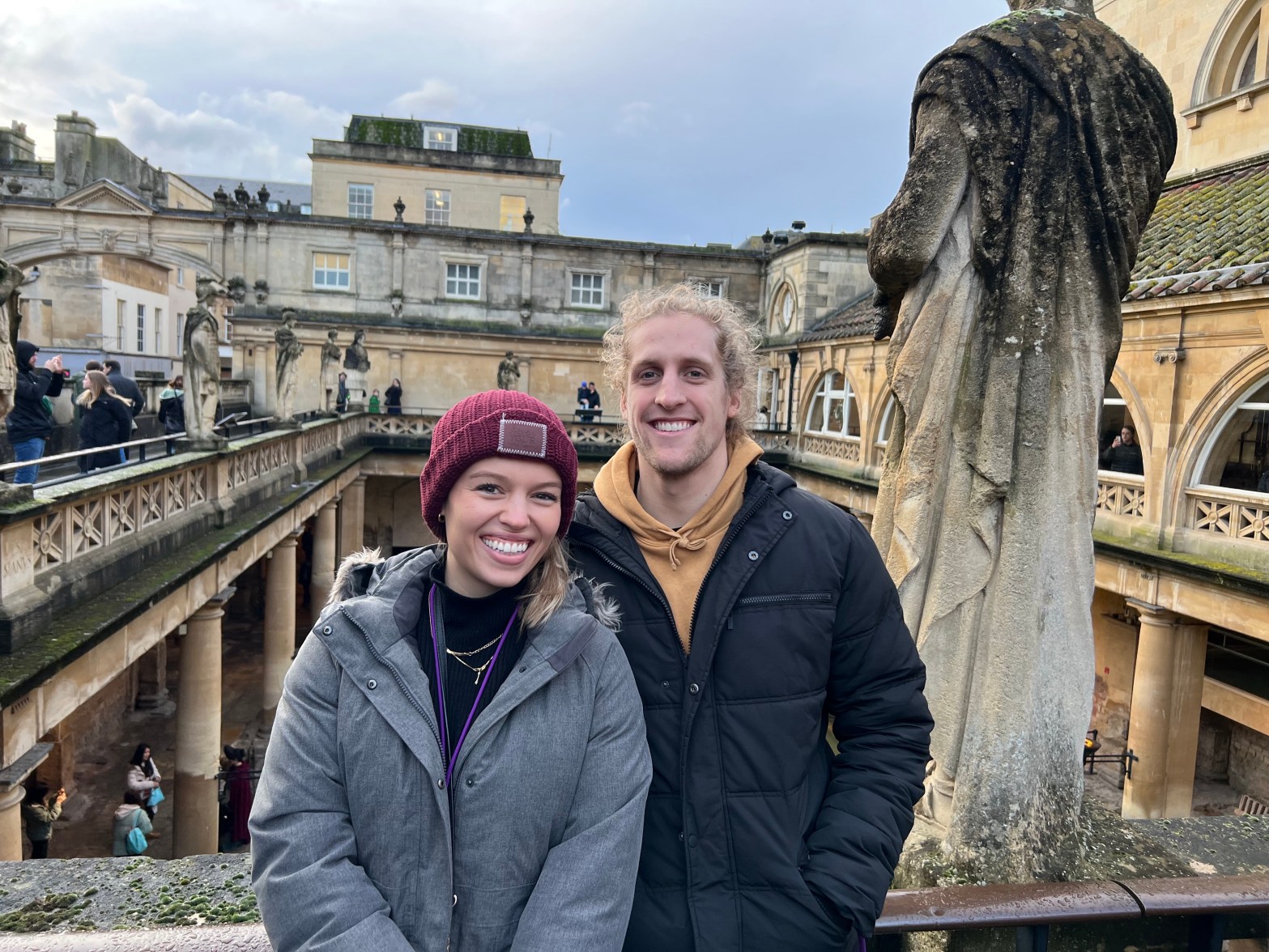
The final stop on our tour was the city of Bath, which is named after the Roman-built baths and temple that were built in around 60 A.D.
Roman Baths
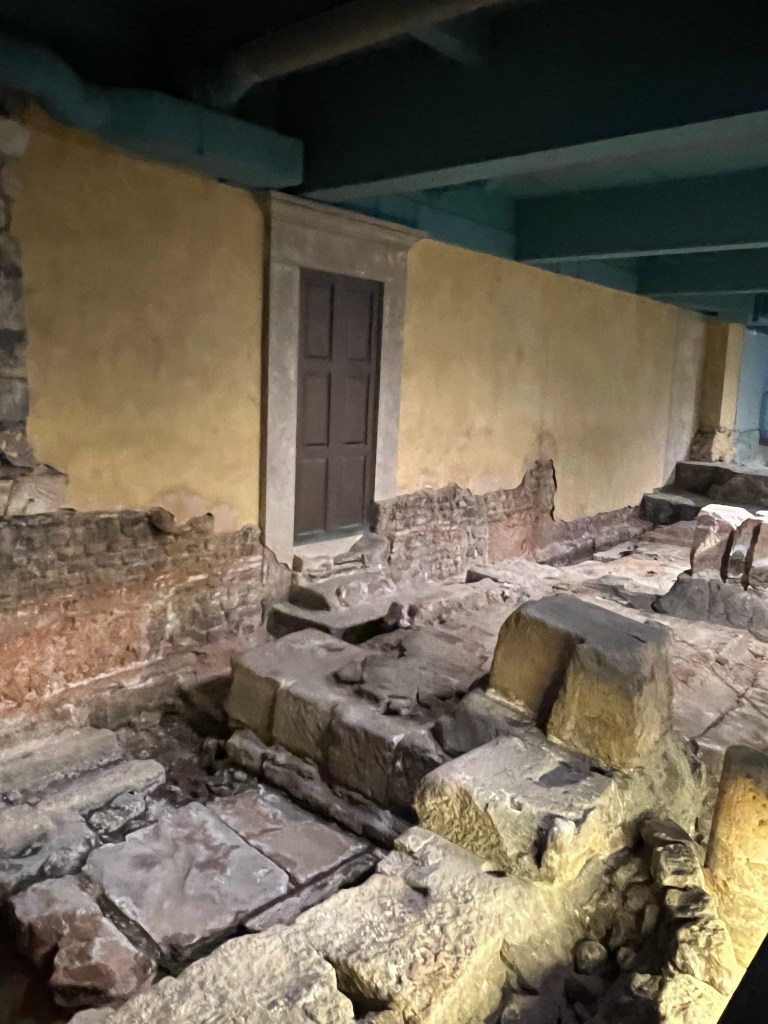
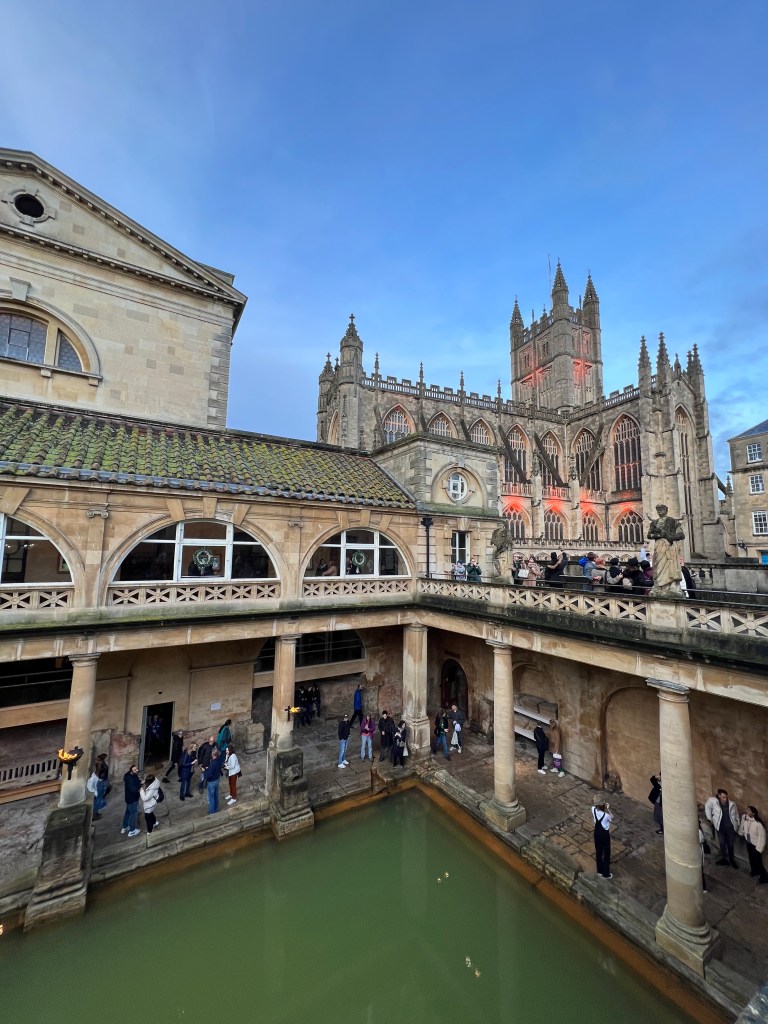
We visited the Roman Baths and were able to explore the complex (which included hot and cold baths and a gym), walk on the original Roman pavements and see the ruins of the Temple of Sulis Minerva (goddess of wisdom, justice, law, and victory).
The baths were built over a natural hot spring, that was found supposedly found by Celtic King Bladud when he was cured of leprosy after bathing in the spring.
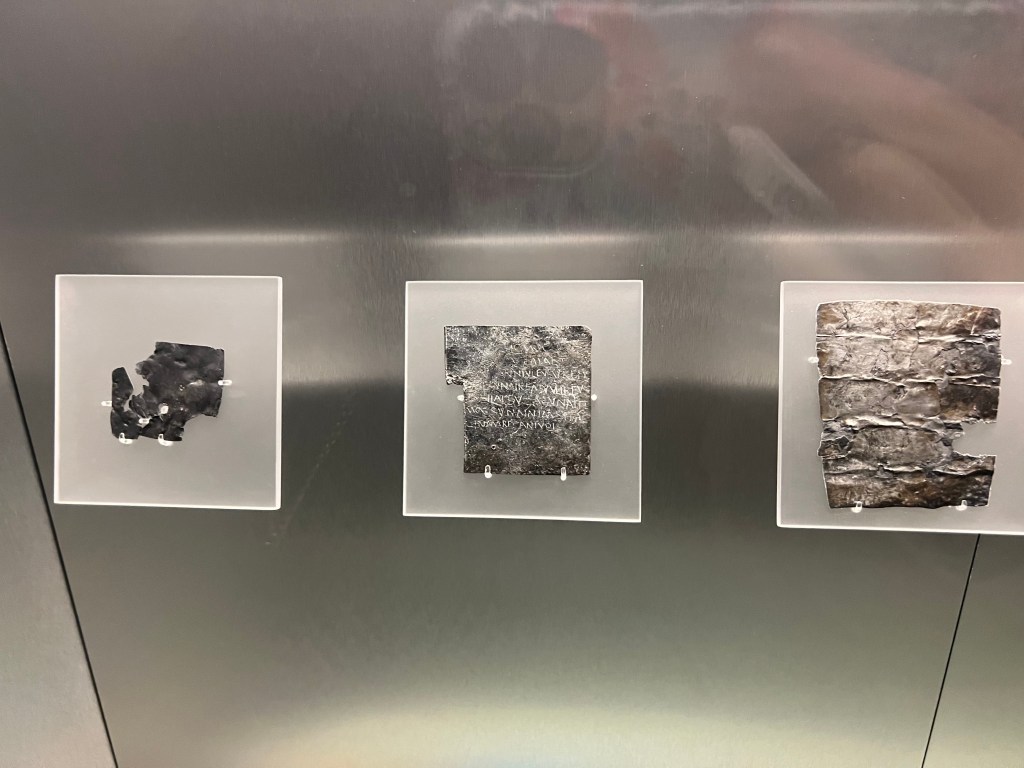
In addition to bathing, people would also write notes or “curses” on lead or pewter and throw them into the Sacred Spring so that Minerva could punish them. In the image below of the inscriptions, one woman is complaining to the goddess that someone store her cloak and another inscription shows a list of names/suspects to help Minerva identify the wrongdoer.
Unfortunately, in 1978 a girl swimming in the baths died from a deadly pathogen in the water. Since then, the baths have been closed to swimming
City of Bath
The City of Bath has undergone many different remodels and was last bombed by the Germans during WW2 in the “Baedeker Raids,” where targets were chosen for their cultural and historical significance instead of their military or strategic value.
Today, it is one of the ten most visited English cities by overseas tourists with up to 1.3 million visitors yearly!
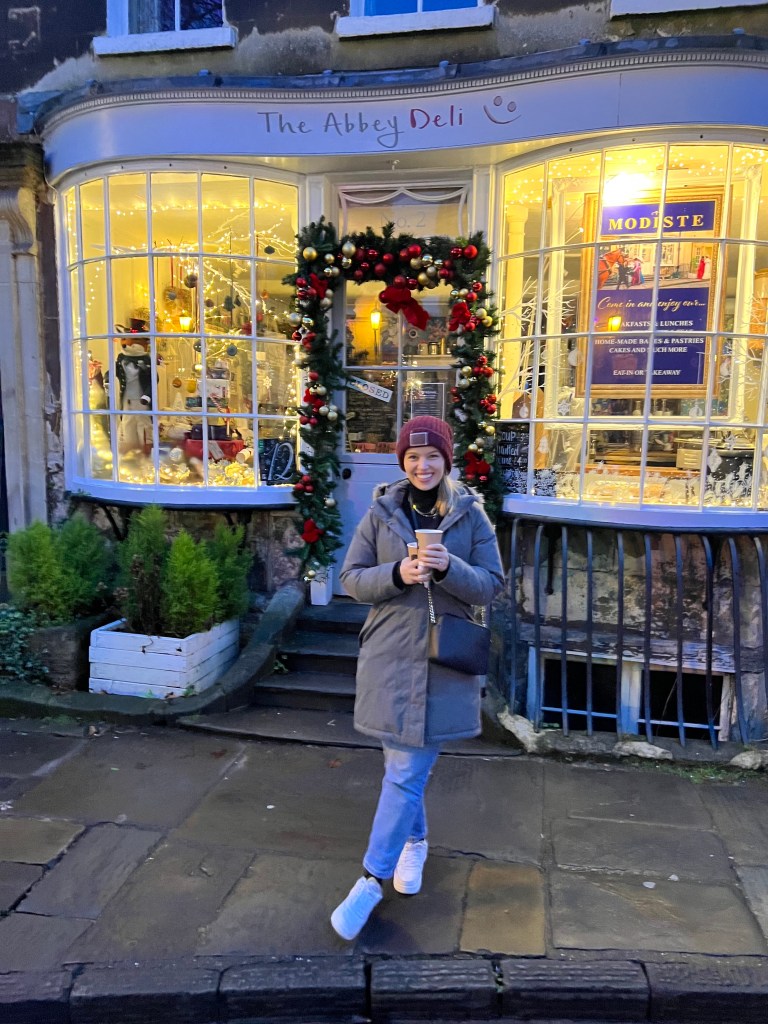
After visiting the Roman Baths, we had some extra time to explore the city. We grabbed some Cornish pastries (which Brev loved) and hot chocolates. I was also excited to see the Modiste from the Netflix show Bridgerton, it turns out that a lot of Bridgerton was actually filmed in Bath! Who knew?
While it was a loooooong day (12 hours+), if you find yourself in England we would recommend taking this GoldenTour tour of Windsor Castle, Bath and Stonehenge to see three of Britain’s national treasures. Additionally, our tour guide Bruce was AMAZING, so try to get on his tour bus if possible.
 The Jo Show