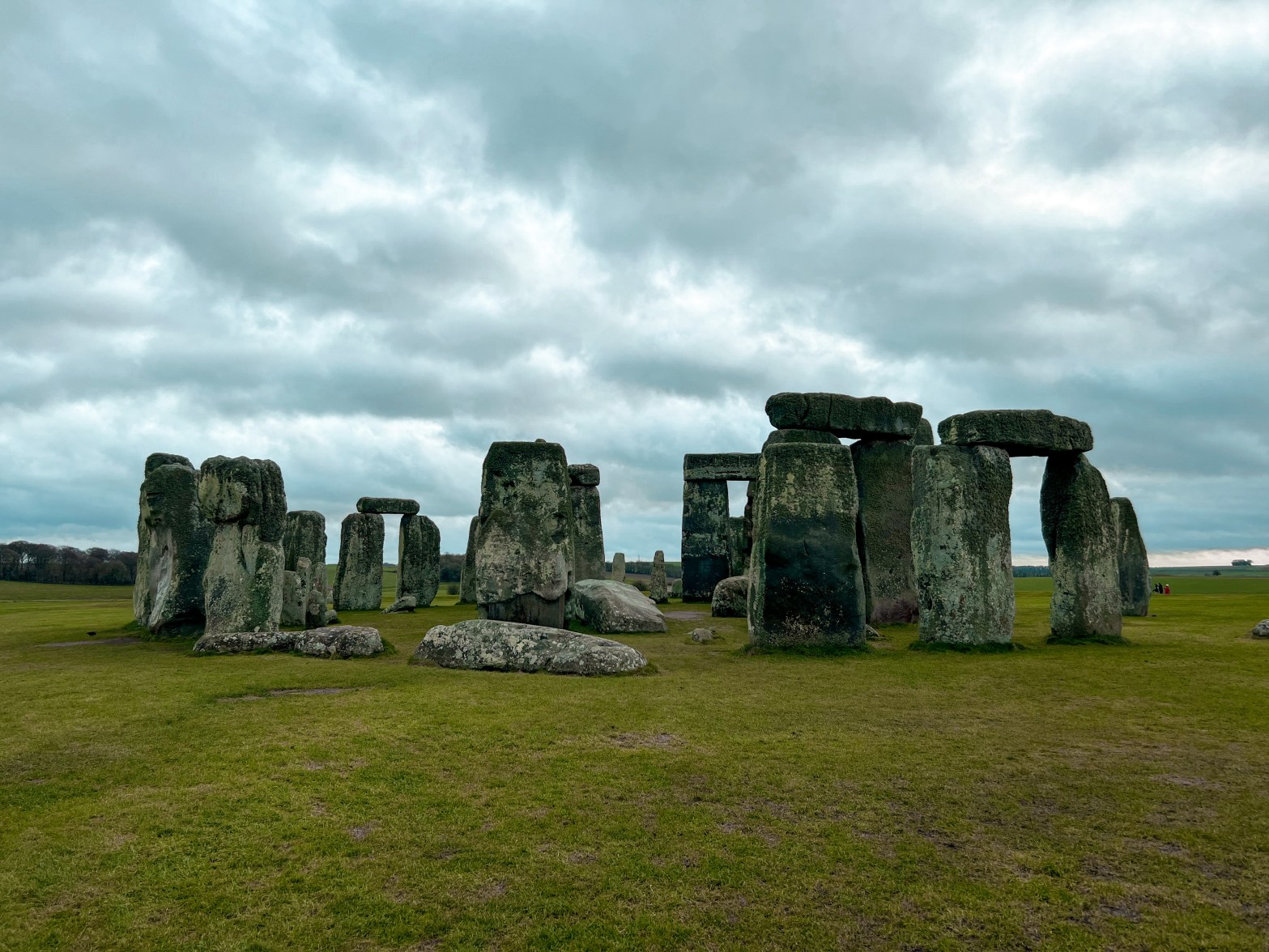
Next up, we stopped at the mysterious and fascinating Stonehenge!
This was truly incredible to see in person.
While no one knows exactly why Stonehenge was created, there’s a lot of speculation that it was used as a calendar, pilgrimage destination or ceremonial site (or all the above).
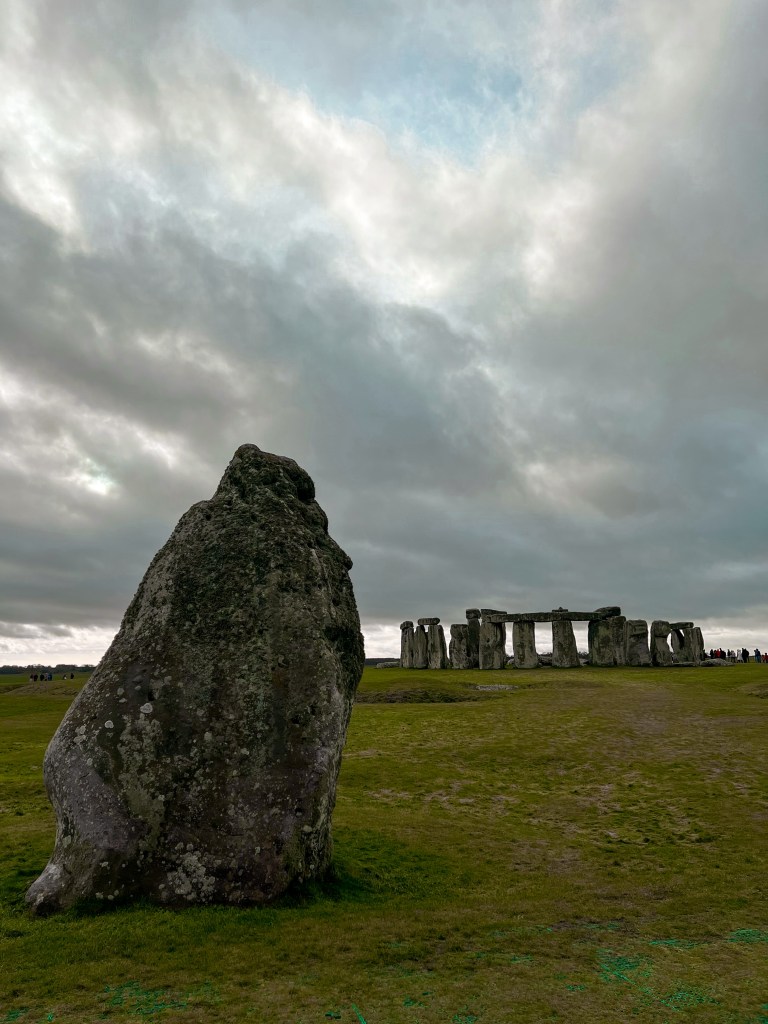
Marking the passage of time was important to many ancient cultures, and it’s likely not coincidence that Stonehenge was built to align with the sun on solstices. On the summer solstice, the sun rises behind the Heel Stone in the north-east part of the horizon and its first rays shine into the heart of Stonehenge.
There’s also evidence that Stonehenge was originally used as a burial ground, and surrounding the area are several hundred burial mounds. They’ve traced some of these remains from all different parts of Europe.
Archaeologists believe that Stonehenge was built in several stages, with the first monument (an early henge) being built about 5,000 years ago. The stones were then set up in the center of the monument from around 3000 to 2000 BC.
Stonehenge is built using tall vertical stones, called sarsens, that make up the outer circle and smaller stones, called bluestones, that make up the inner ring. Seeing how massive these rocks were in person just made us question how they got there. These stones are also from an entirely different geographic region, over 150 miles away… so we can’t even imagine how these ancient people were able to move these stones.
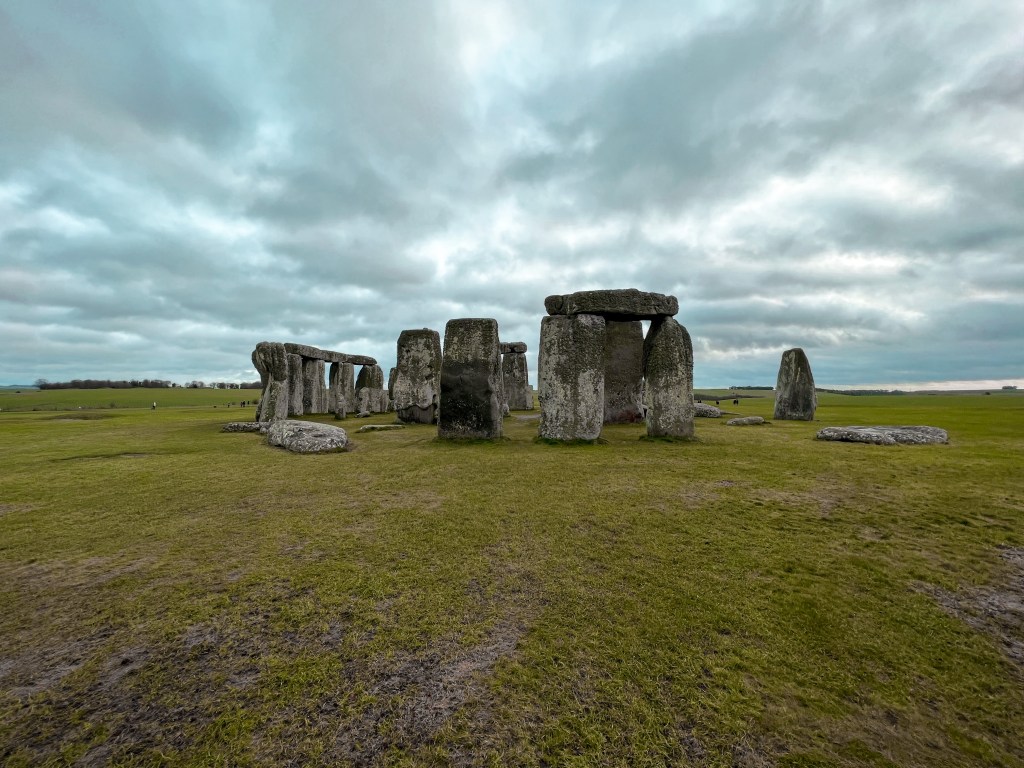
During our visit, we were surprised that Stonehenge is a mile away from the visitors’ center and visitors either must walk or take shuttles to the stones. Additionally, the stones are roped off and the nearest you can get to the stones is about 15 yards away.
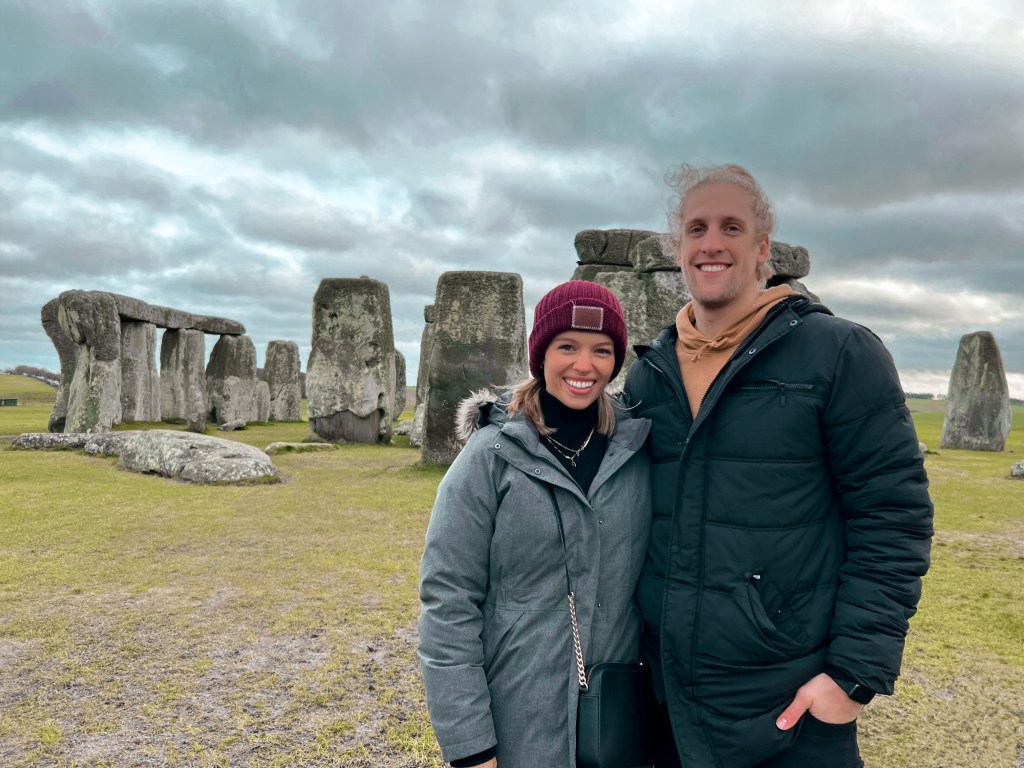
This was definitely a bucket list place, and we feel so lucky that we were able to see Stonehenge in person.
 The Jo Show